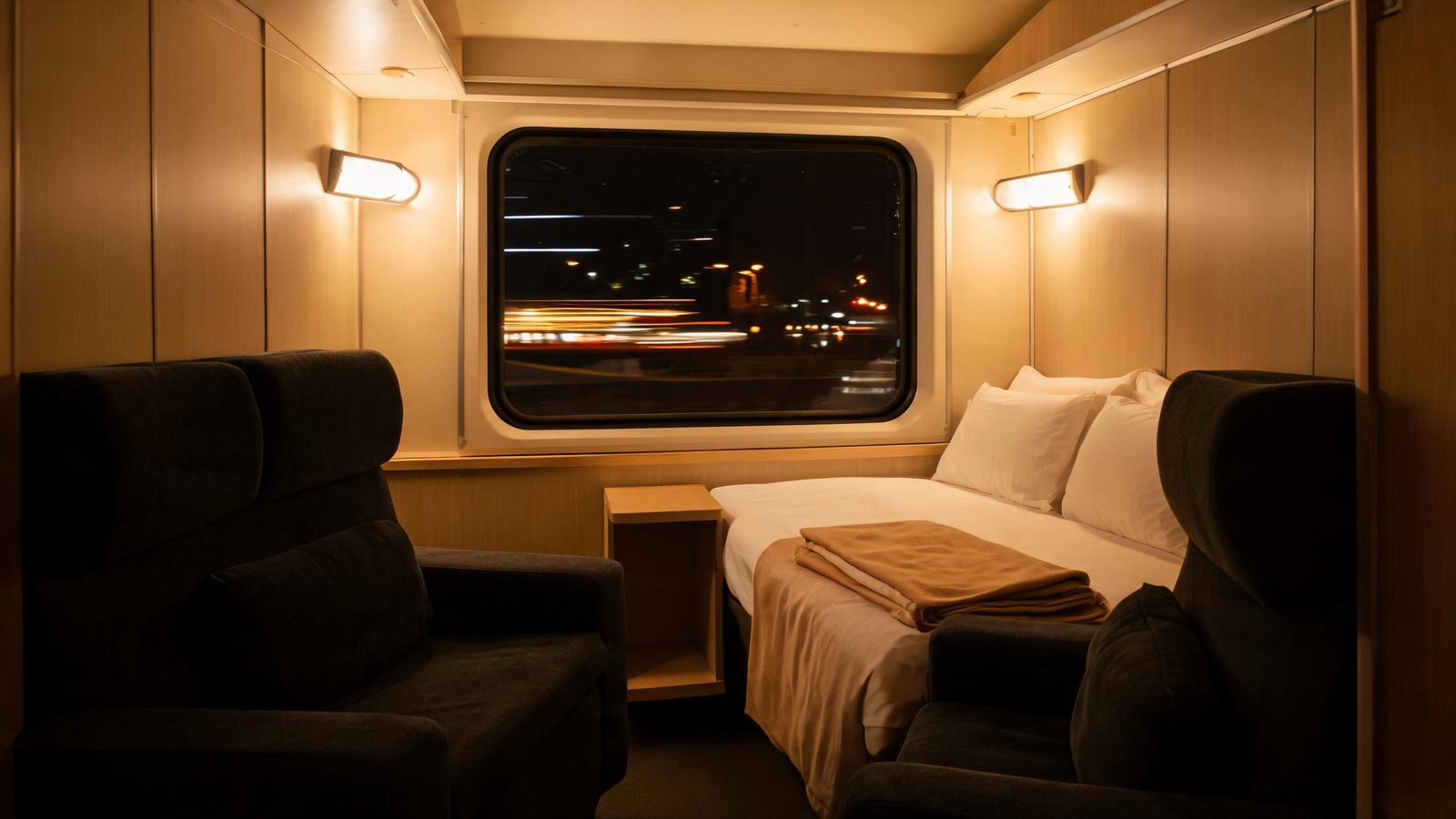
The Amtrak roomette looks smaller in person than in the photos. Two seats face each other, a window fills one wall, and a small table folds out between the seats. At night, the seats slide together into a lower bunk and an upper bunk drops from the ceiling. That is the whole room.
For a solo traveler or a couple, it is enough. For anyone expecting a hotel room, it is a surprise. The trick is to pack for the space, plan for the time, and treat the train as the trip rather than the transport.
The Amtrak roomette, honestly
A roomette is roughly the size of a large closet with a window. There is storage above the door, a small area for bags, and a fold-out table. The seats are comfortable for sitting and reclining, but they are not a sofa.
If you are traveling with another person, the room is intimate. You will be close, and you will need to coordinate who changes clothes when. If you need more space, a bedroom is larger, with a private bathroom and a shower in some configurations. A roomette is the compact option.
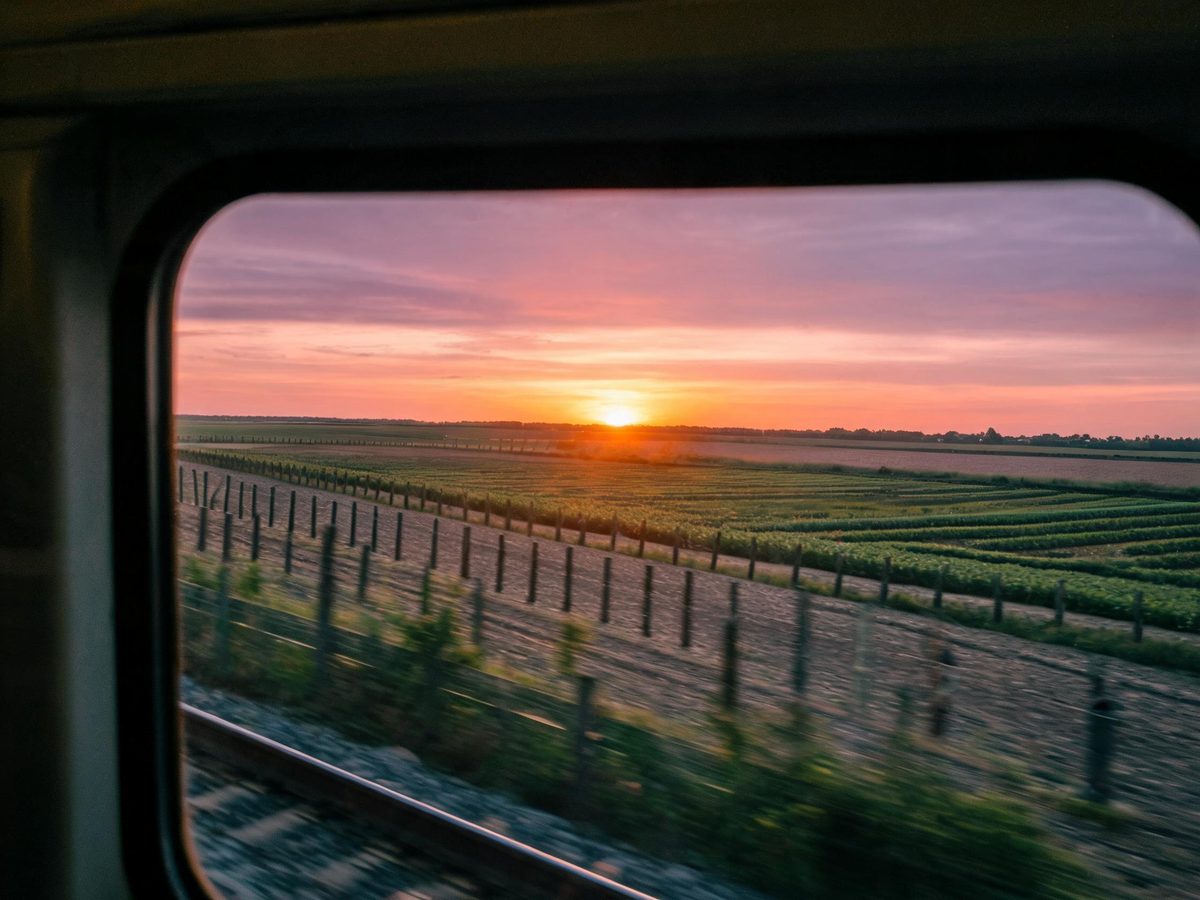
The window is the point. On a long-distance route, the scenery changes for hours. A book, a camera and a pair of headphones are more useful than extra luggage.
A roomette from day to night
The attendant converts the room while you are at dinner. The seats fold into a lower berth, and the upper berth is lowered from the ceiling. The lower berth is wider and easier to climb into; the upper berth is smaller and has a ladder.
Ask the attendant to show you how the bunk works before you need it. Learn how the ladder works before you need it; finding a bag behind it at midnight is a bad introduction to the room. Keep the space under the seats clear so the conversion can happen.
If you are a light sleeper, bring earplugs and an eye mask. Trains are not silent. The horn, the track noise and the movement are part of the experience. A white-noise app can help.
Roomette meals and the dining car
On many long-distance trains, sleeper passengers receive meals in the dining car. The menu is limited but usually includes a hot breakfast, lunch and dinner. Some routes use a café car or a flexible meal service instead. Confirm what your train includes.
Meal times are often assigned. The attendant will take your reservation for dinner. If you have a dietary restriction, tell Amtrak when you book and remind the attendant at boarding. The kitchen can accommodate some requests, but not every one.
Eating in the dining car is a social experience. You may be seated with other travelers. That is part of the charm for some people and a reason to choose a private room for others. If you prefer quiet, ask whether room service is available on your route.
Luggage in an Amtrak roomette
Amtrak's baggage allowance depends on the train and the class of service. A roomette does not come with a large private closet. Pack a soft-sided bag that fits in the overhead storage or under the seat. A large suitcase may need to be checked or stored in the baggage area.
Bring a small bag for the things you need during the trip: medication, charger, toothbrush, a change of clothes. Keep it within reach. The larger bag can stay in the rack.
There is usually a power outlet in the room. Bring a short extension cord or a power strip if you have multiple devices. A small flashlight is useful at night.
Showers and bathrooms on Amtrak
A roomette may have a small toilet in the room, depending on the car. Some cars have a shared bathroom down the hall. A shower may be shared or private depending on the accommodation. Ask when you book, especially if mobility or privacy matters.
Bring flip-flops for a shared shower, a quick-dry towel if you prefer your own, and a small toiletry bag. The movement of the train makes a razor and a mirror a bad combination; keep it simple.
When the Amtrak train runs late
Long-distance trains share track with freight railroads, so delays are part of the schedule. Several hours is possible. Build a buffer into your plans, especially if you have a connection or a reservation at the other end.
Amtrak may provide updates and, in some cases, alternate transportation or accommodation. Read the passenger rights and the terms of your ticket. Travel insurance can help with a missed connection, but check what it covers.
Do not schedule a tight connection between a long-distance train and a flight. A same-day flight after an overnight train is risky. An extra night in the arrival city is cheaper than a missed flight.
Is an Amtrak roomette worth it?
For a long overnight route, a roomette turns an uncomfortable seat into a place to lie down, close a door and eat a meal. For a short daytime trip, a coach seat may be enough. The value depends on the length of the trip and how much privacy you need.
Pack light, ask about meal times when you board, keep essentials in one bag, and leave room in the schedule for a late train. The ride is the part you remember; the arrival time is only a hope.
Sources and further reading
About the author
Dana Whitfield
Dana writes about rail, road trips and public lands, with an eye for plans that survive contact with reality. She keeps a running list of campgrounds worth a second visit.
Travel and public lands · Portland, Oregon