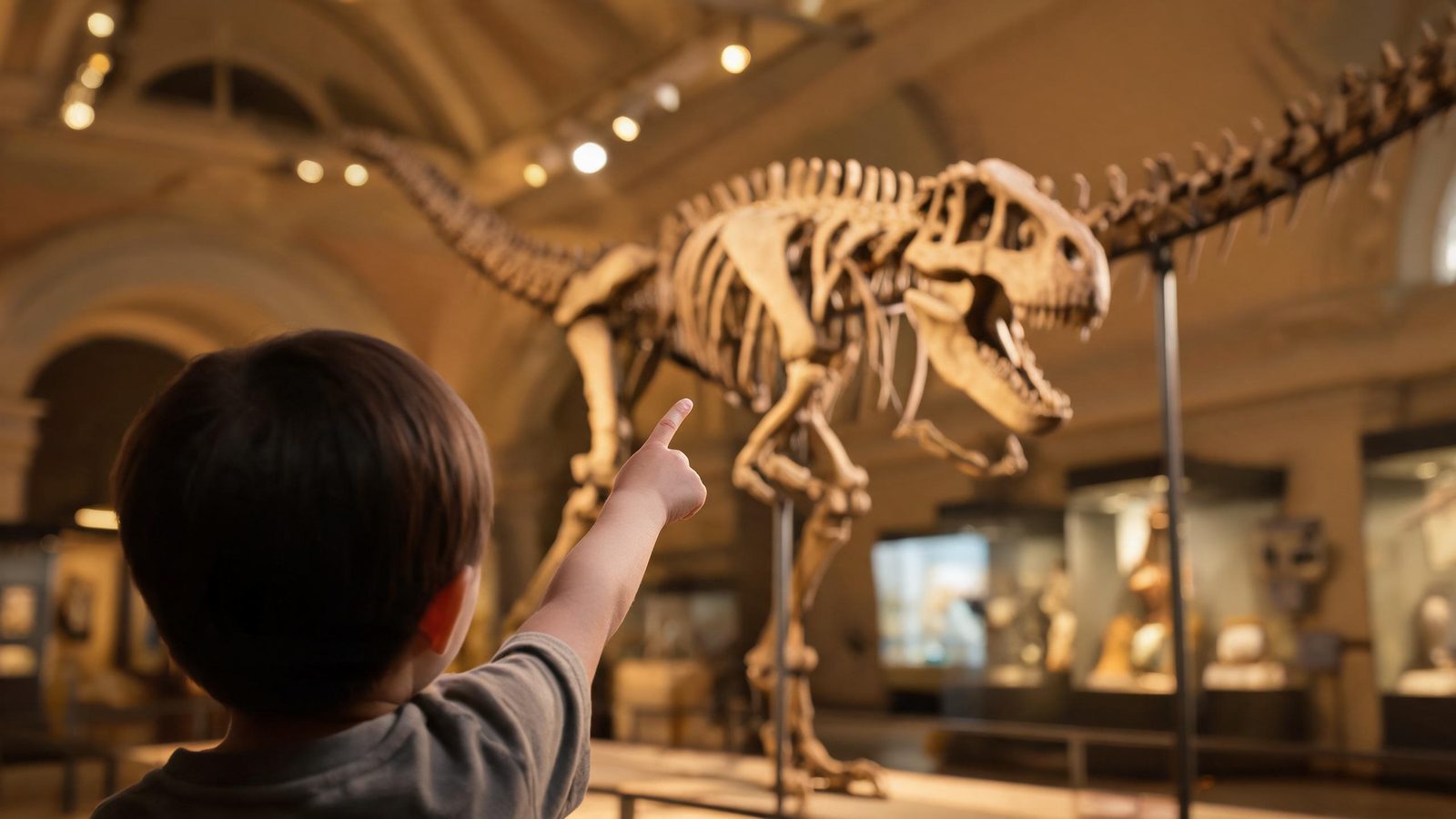
The museum map is a promise and a trap. Every gallery looks interesting, and every gallery adds another twenty minutes. An hour in, the child is on the floor, the parents are negotiating, and the dinosaur skeleton is still two rooms away.
A museum visit with kids works better when the plan is smaller than the building. Pick three objects, one bathroom break, one snack, and a clear exit time. The goal is a good visit, not a complete one.
Before a museum visit with kids
Check the museum's family page. Look for stroller rules, food policies, timed tickets and any quiet rooms. A museum that allows snacks and strollers is easier than one that does not. A timed ticket can reduce the line, but it also fixes your start time; arrive early enough to use the bathroom and settle in.
Look at the collection online with the child. Pick three objects together: one large, one strange, one that can be touched or explained. A child who chooses the objects is more interested in finding them.
Bring a small bag with water, a snack, a tissue and a phone charger. Do not bring a heavy backpack if the museum restricts bags. Wear comfortable shoes; museum floors are harder than they look.
A three-object plan for a museum with kids
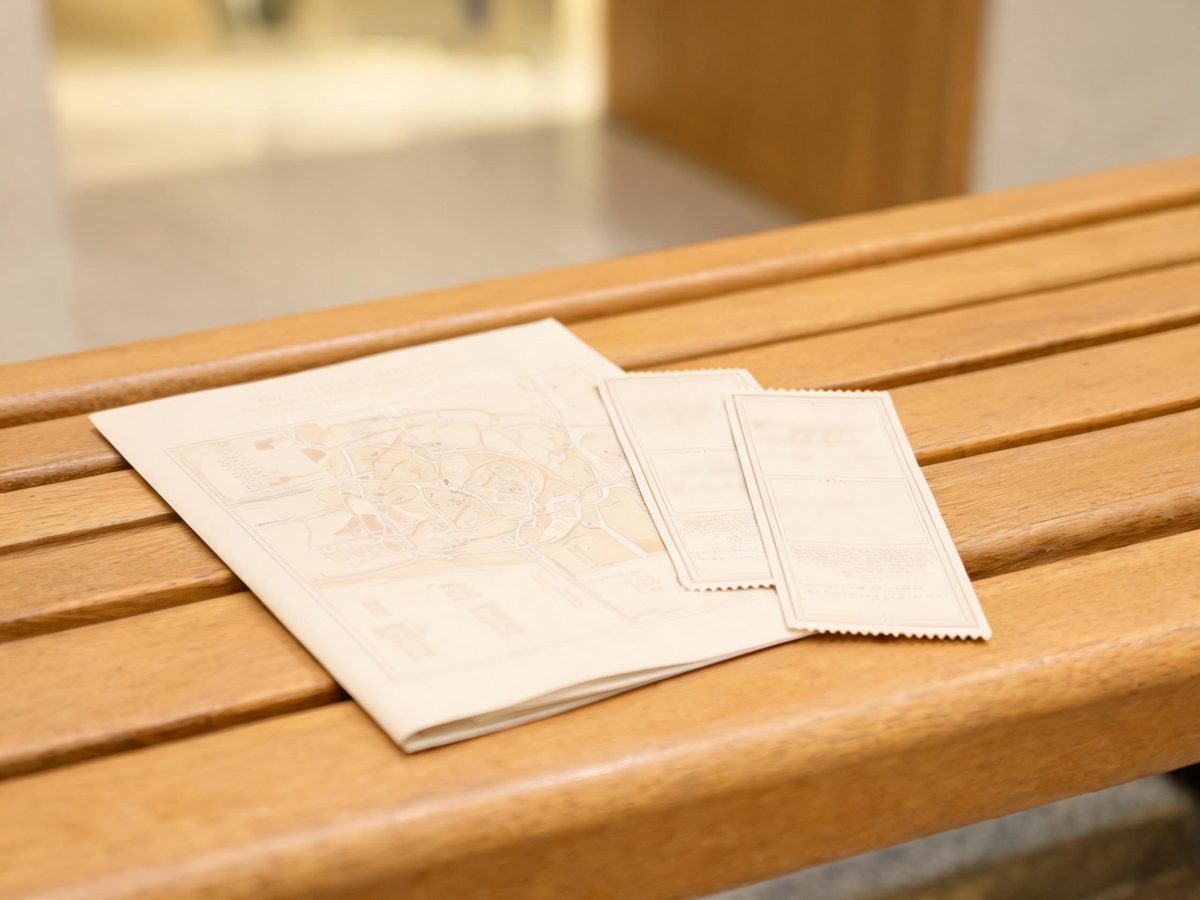
Choose three objects before you enter. Mark them on the map. Go to the first object, spend five minutes, then move. Do not walk through every room on the way. A direct route makes the visit feel shorter and the destination feel bigger.
At each object, ask two questions: “What do you notice?” and “What do you think it was used for?” Do not lecture. A child who is allowed to look first will listen longer.
If the child wants to stay at one object, stay. The plan is a route, not a schedule. A museum is a place to look, not a checklist to finish.
Timing and breaks on a museum visit
A young child's attention often lasts 45 minutes to an hour. A museum visit of two hours is a long one. Plan a break at the halfway point: a snack, a bathroom, a bench, a courtyard. The break is part of the visit, not a failure.
Watch for the signs: dragging feet, asking to leave, touching everything, arguing about nothing. Those are fatigue signals. Leave before they become a meltdown. A short visit that ends well is easier to repeat than a long visit that ends badly.
If the museum has a family room or a hands-on area, use it. A child who has been looking all morning needs to touch something. A hands-on exhibit can reset the mood for another gallery.
The map and the museum building
Give the child the map. Ask them to find the bathroom, the exit, the café and the next object. A map is a puzzle, and a child who is solving it is less likely to complain about walking.
Use the stairs when possible. Elevators are slow and crowded. If a child is in a stroller, check the accessible route before you start; not every historic museum has one.
What to bring to a museum with kids
- Water and a snack that does not require a café line.
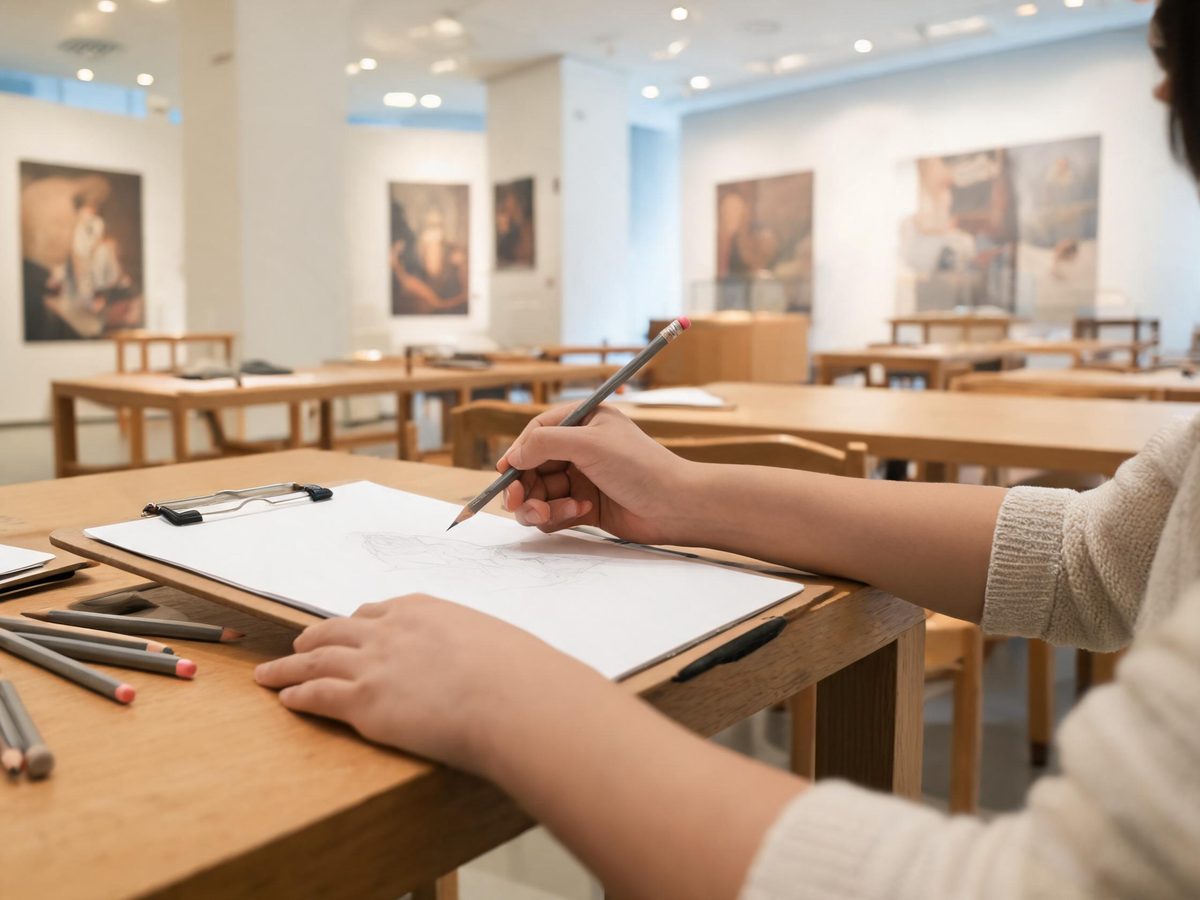
- A small notebook and a pencil for sketching or writing three words about each object.
- A light layer for cold galleries.
- A phone charger if you are using digital tickets or maps.
- A plan for lunch before everyone is hungry.
Leave the toys at home. A museum is interesting enough without a distraction. A single small comfort object is fine; a bag of toys competes with the exhibits.
When the museum is crowded
Go early or late. The middle of a weekend day is the worst time for a popular museum. If a special exhibition is sold out, skip it. The permanent collection is usually less crowded and just as interesting.
Use the quieter galleries for a reset. A decorative arts room or a history exhibit with few visitors can be a better break than a crowded café. Sit on a bench, look at one thing, and let the child recover.
Leaving a museum well
End with something the child chose, not with the gift shop. A postcard, a pencil or a small book can be a souvenir, but the visit should end with a memory, not a purchase. Ask one question on the way out: “What will you tell someone about this place?” The answer is the part they keep.
Pick three objects, schedule one break, and leave while the child still likes the place. The visit does not have to cover the building to be worth the trip.
Sources and further reading
About the author
Dana Whitfield
Dana writes about rail, road trips and public lands, with an eye for plans that survive contact with reality. She keeps a running list of campgrounds worth a second visit.
Travel and public lands · Portland, Oregon