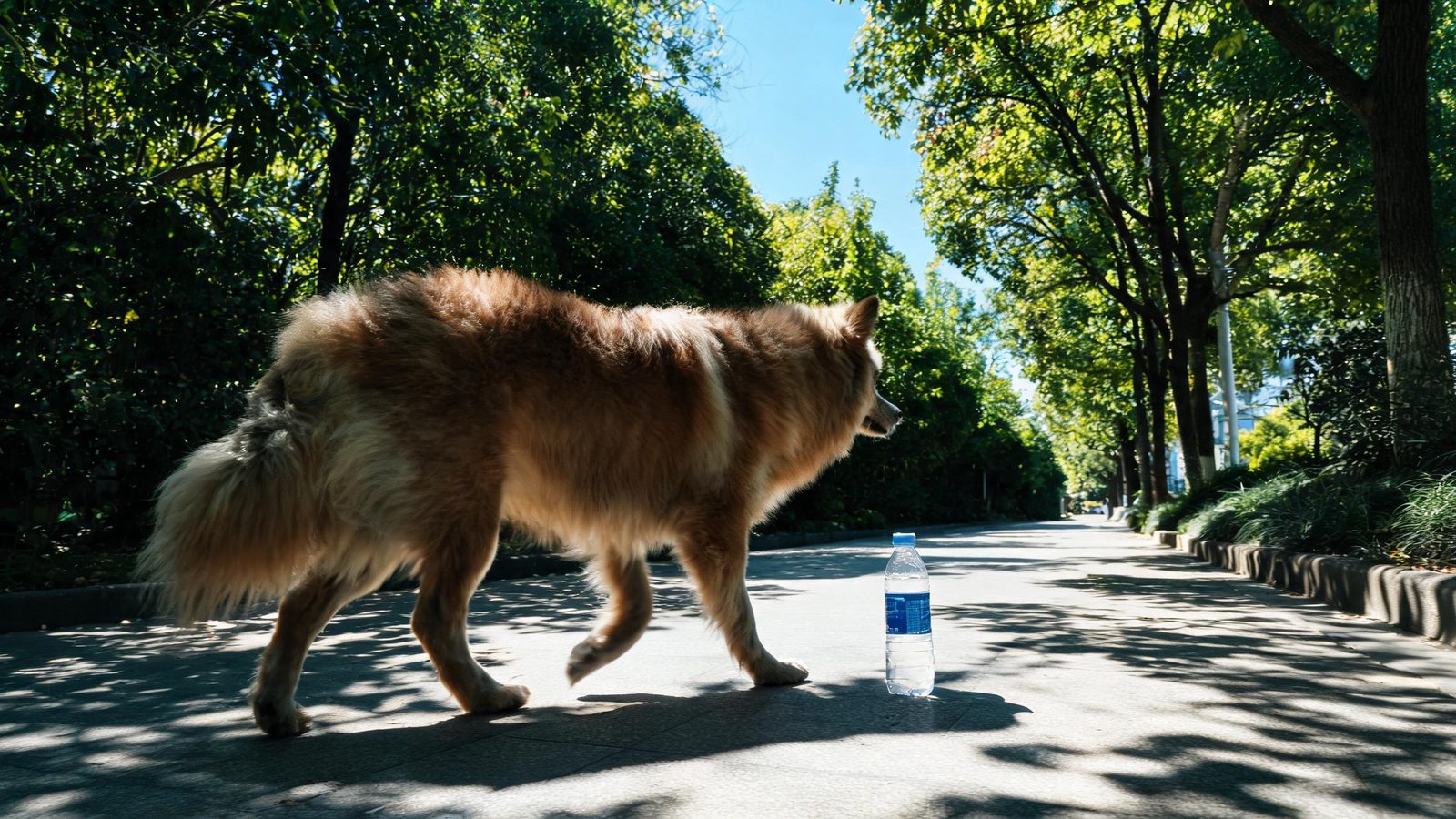
On a 90-degree afternoon, the air feels hot and the sidewalk feels hotter. Asphalt absorbs sunlight and can get hot enough to burn paws; the air temperature is a poor guide to the surface. A short walk on dark pavement at midday can do damage before the dog shows it.
Heat safety is less about avoiding summer and more about timing. Walk early, walk late, test the ground, carry water and know the signs that mean stop.
Testing hot pavement before a dog walk
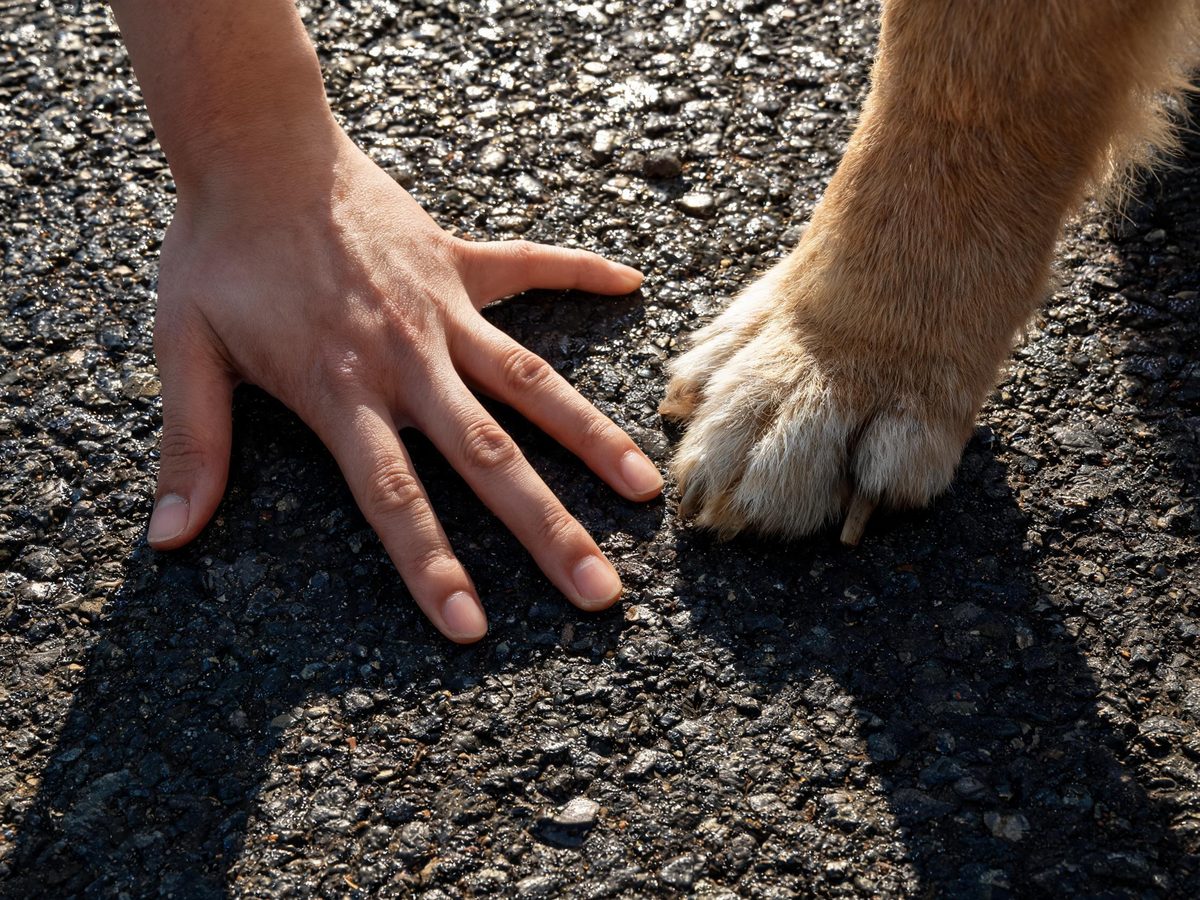
Place the back of your hand on the pavement for five seconds. If you cannot hold it there comfortably, it is too hot for a dog's paws. This is a simple test, not a precise measurement. A shaded sidewalk can be much cooler than a sunlit road, so test the route you plan to use.
Paw pads can blister and peel after a hot walk. If the dog limps, licks its paws or refuses to walk, check the pads. Cool the feet with water and call a vet if the skin is damaged.
Timing a dog walk around the heat
Walk before the sun is high and after it has dropped. In many places, that means before 9 a.m. and after 7 p.m. during a heat wave. Shorten the route. A dog does not need the same distance in extreme heat.
Bring water for the dog and for yourself. A collapsible bowl is easy to carry. Offer water often, but do not force the dog to drink. If the dog is panting heavily, stop in the shade and let it recover before continuing.
Choose grass or shade where possible. A park path under trees is cooler than a bare sidewalk. Avoid sand, artificial turf and dark asphalt, which hold heat.
Signs of heatstroke in a dog
Normal panting is how a dog cools down. Trouble looks different: heavy, labored breathing; thick drooling; bright red gums; vomiting; weakness; confusion; collapse. A dog that cannot stand or has a body temperature that feels extremely hot needs emergency care.
Do not wait to see if it improves. Move the dog to shade or a cool room, offer water, and call the vet. Cooling too aggressively with ice or ice water can cause shivering and constrict blood vessels. Use cool water, fans and wet towels, and let the vet guide the rest.
Flat-faced breeds, overweight dogs, senior dogs and puppies are at higher risk. So are dogs with dark coats and dogs not used to heat. A 20-minute walk that is fine for one dog can be dangerous for another.
Water, shade and a dog-safe backyard
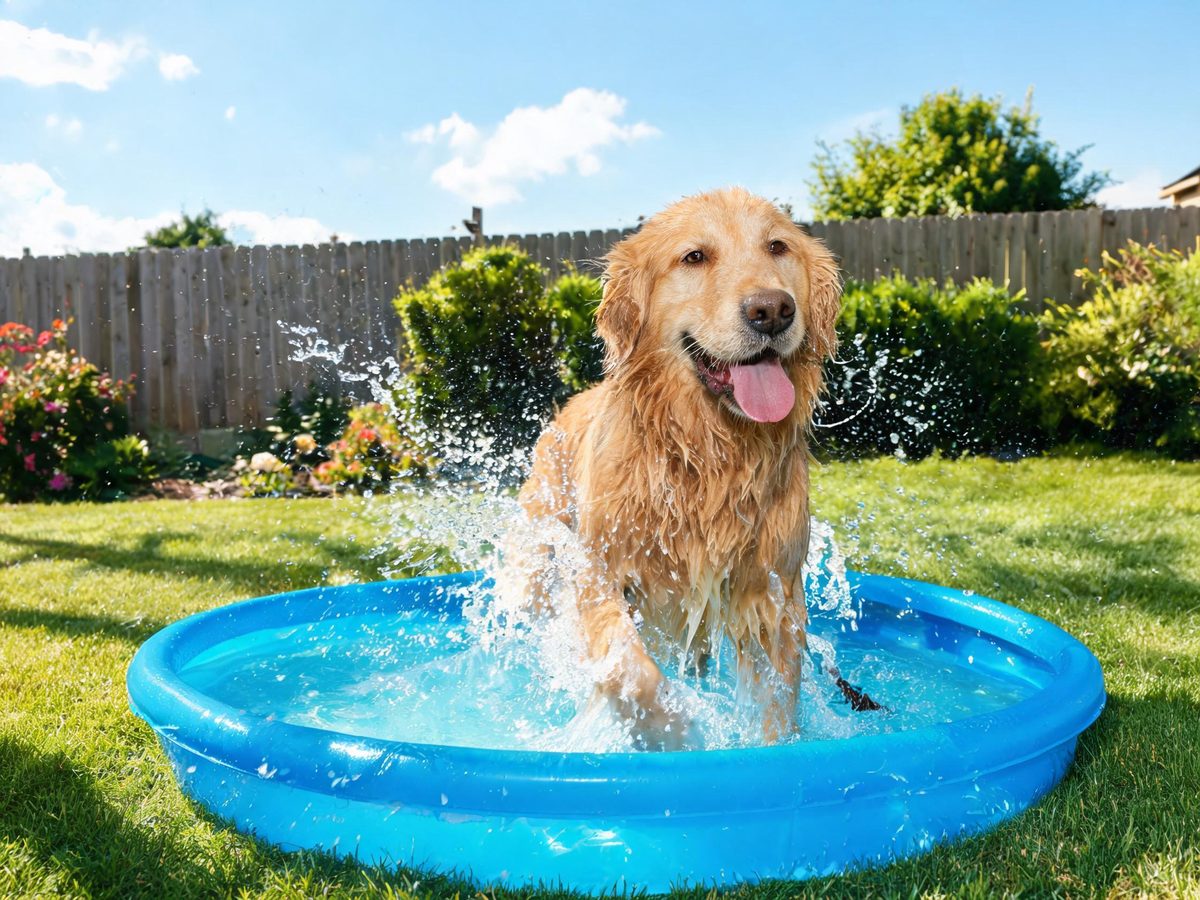
A backyard is not automatically safe. A dog that cannot escape the sun can overheat on a patio. Provide shade, fresh water and a way to get off hot concrete. A kiddie pool with shallow water can help, but supervise; some dogs drink too much pool water.
Do not assume a dog will self-regulate. A playful dog may keep running after a ball until it collapses. Stop the game before the dog is exhausted. Rest in the shade every few minutes.
Heat safety in cars and travel
A parked car is the most common heat emergency. On an 85-degree day, the interior can reach well over 100 degrees within minutes. Cracking the windows does not make it safe. Leave the dog at home, or take it with you to a place where dogs are allowed.
If you are driving with a dog, keep the air conditioning on and the dog in a secure carrier or harness. Bring water and a bowl. Do not let the dog ride with its head out the window at highway speed; debris and wind can injure the eyes and ears.
Cooling a dog safely
Move the dog to shade or an air-conditioned room. Wet the paws, belly and neck with cool water. Use a fan if available. Offer small amounts of water. Do not submerge the dog in ice water or use alcohol rubs.
Call the vet while you cool the dog. Heatstroke can cause internal damage that is not visible. A dog that seems to recover may still need fluids and monitoring. The emergency clinic can check temperature, hydration and organ function.
If the dog is unconscious, struggling to breathe, or has a seizure, go to the emergency clinic immediately. Do not wait for a call back.
A summer routine for dog owners
- Walk early or late, not in the middle of the day.
- Test the pavement with the back of your hand for five seconds.
- Carry water and a bowl on every walk.
- Shorten the route during a heat wave.
- Provide shade and water in the yard.
- Skip the car trip if the dog cannot come inside with you.
- Know the emergency clinic before you need it.
Walk early, test the pavement with the back of your hand, carry water, and turn back sooner than seems necessary. No dog needs to prove it can handle the heat.
Sources and further reading
About the author
Priya Raman
Priya covers everyday animal care, shelter adoptions and the practical side of sharing a home with pets. Her guides focus on setup, routine and when to call a veterinarian.
Pets and household care · Atlanta, Georgia