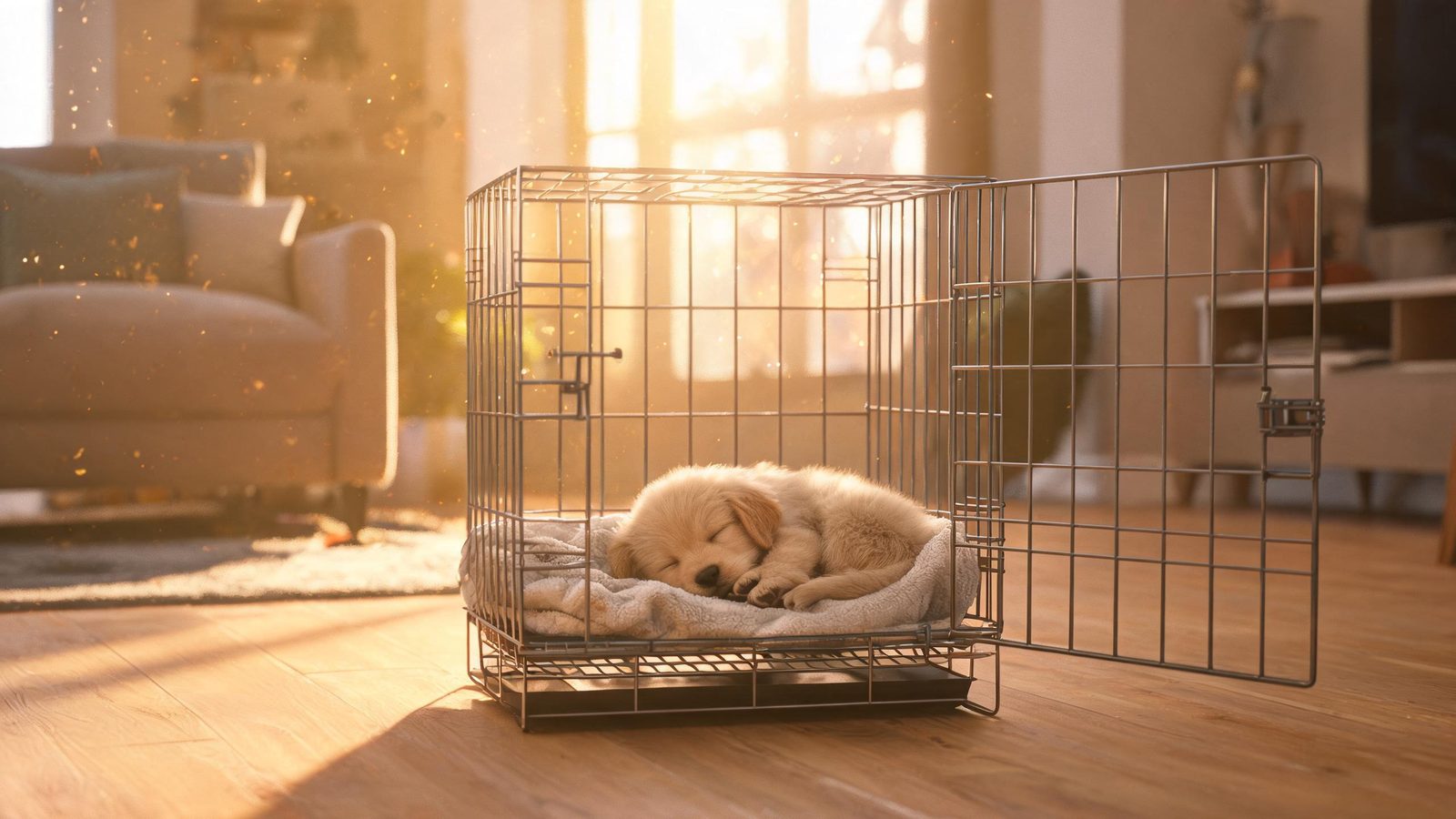
The first night with a crated puppy often sounds like a small animal is being audited. The whining is not a sign that the crate is cruel. It is a sign that the puppy has not slept alone in a small space before.
Crate training works when the crate is introduced as a comfortable bedroom, not as a punishment. The sequence below is slow on purpose. A puppy that learns to settle in the crate can travel, go to the vet and stay safe at home alone.
Choosing a crate that fits the puppy
The crate should be large enough for the puppy to stand, turn around and lie down fully stretched. It should not be so large that the puppy can use one corner as a bathroom and sleep in the other. If you buy a crate for the adult size, use a divider to shrink the space while the puppy grows.
A wire crate with a solid floor and a removable tray is easy to clean. A plastic travel crate works too, but it can be harder to see the puppy and to introduce gradually. Whichever you choose, remove loose bedding that can be chewed and swallowed.
Step one: make the puppy's crate ordinary
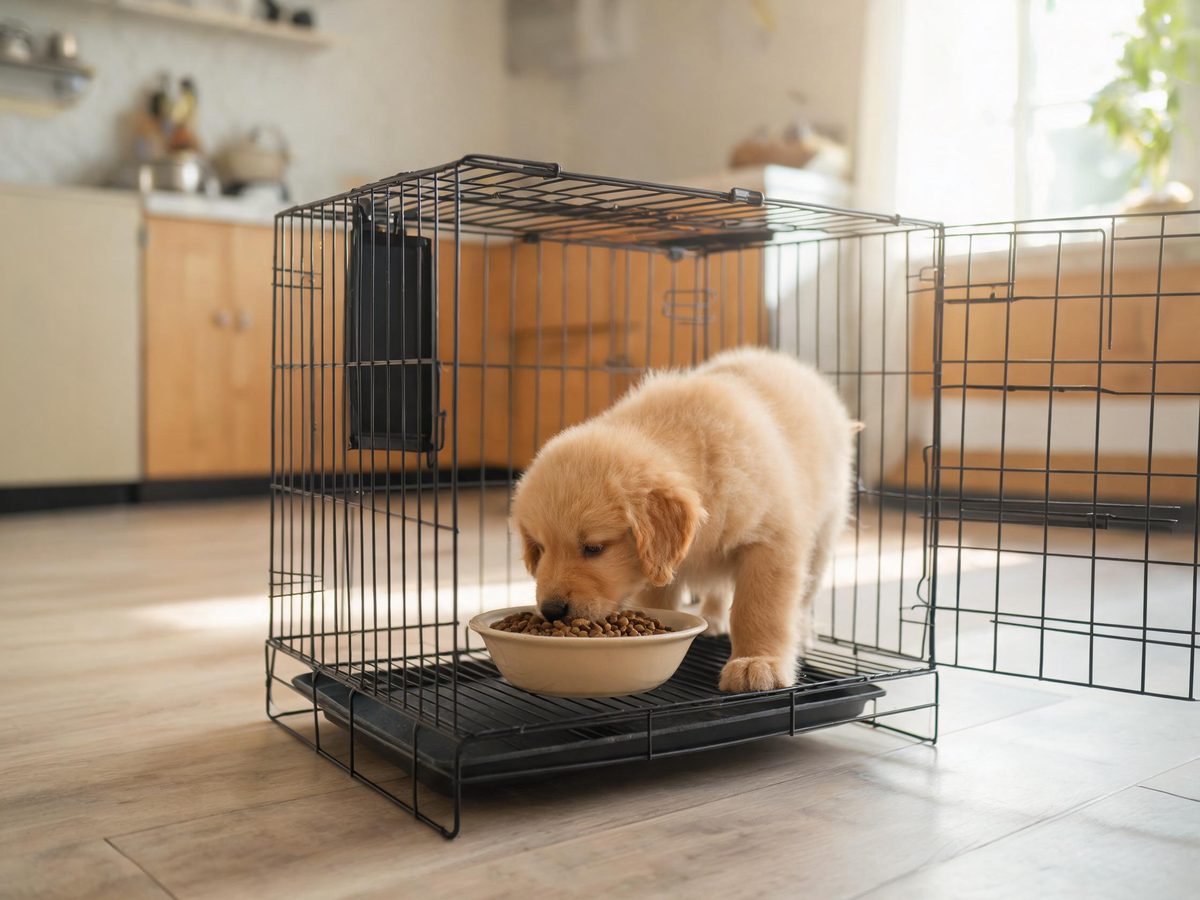
Set the crate in a room where the family spends time, not in a basement or a garage. Leave the door open. Toss a treat inside and let the puppy walk in and out. Do not push the puppy in. Do not close the door on the first day.
Feed meals in the crate with the door open. Put the bowl just inside, then a little farther in. If the puppy is comfortable, close the door while it eats for a few seconds, then open it before the puppy finishes. Repeat over several days.
Add a soft blanket and one safe chew toy. Do not add a water bowl that can spill; offer water before and after crate time.
Step two: short closes for the puppy
Close the door for five seconds while the puppy is calm. Open it before the puppy starts to fuss. The goal is to teach the puppy that the door closing is not the end of the world. If you wait for a whine, you teach the puppy that whining opens the door.
Build to 30 seconds, then a minute, then five. Stay in the room for the early sessions. Sit nearby and read. The puppy needs to see that you are still there.
If the puppy whines, wait for a pause, then open the door. A pause is the behavior you want. If the whining escalates, the step was too big. Go back to a shorter duration.
Step three: leaving the puppy alone
With the puppy settled in the crate, step out of the room for 30 seconds. Return before the puppy panics. Repeat, extending the time. Then step outside the front door for a minute, then five.
Practice departures at different times of day. Puppies learn the pattern of “keys, shoes, door” quickly. If you only leave after a long play session, the puppy may not settle when you leave at an odd hour.
Do not make departures dramatic. A calm “be right back” and a calm return are enough. Long goodbyes teach the puppy that being alone is a big event.
Crate training at night
Put the crate next to your bed for the first weeks. A puppy that can hear you is calmer. If the puppy wakes and needs to go out, take it out quietly, then return it to the crate. Do not turn the night into playtime.
Puppies cannot hold their bladder for long. A general guide is one hour per month of age, plus one, up to a maximum. A two-month-old puppy may need a break every three hours. Adjust to the puppy, not the chart.
If the puppy cries at night, check for a bathroom need, then return it to the crate with a calm voice. If the crying continues for more than a few minutes, the crate may be too large, the puppy may be too warm, or the settling plan may be moving too fast.
How long can a puppy stay in the crate?
A crate is not a substitute for exercise, social contact or a bathroom break. A young puppy should not be crated for a full workday. Arrange a midday visit, a dog walker or a safe pen with a toilet area. The crate is for rest, not storage.
If you must leave for several hours, use a pen or a puppy-proofed room instead of a crate. A puppy that is forced to soil the crate learns to tolerate a dirty bed, which makes house training harder.
When crate training needs professional help
Some puppies have severe confinement anxiety: drooling, destructive chewing, attempts to escape, or constant barking that does not settle. Do not push through. Ask a veterinarian or a certified behavior professional for a plan. A different setup, medication, or a slower introduction may be needed.
The goal is a puppy that chooses the crate for a nap, not one that merely tolerates the door. If the puppy settles only when you are in the room, shorten the next absence and try again.
Sources and further reading
About the author
Priya Raman
Priya covers everyday animal care, shelter adoptions and the practical side of sharing a home with pets. Her guides focus on setup, routine and when to call a veterinarian.
Pets and household care · Atlanta, Georgia