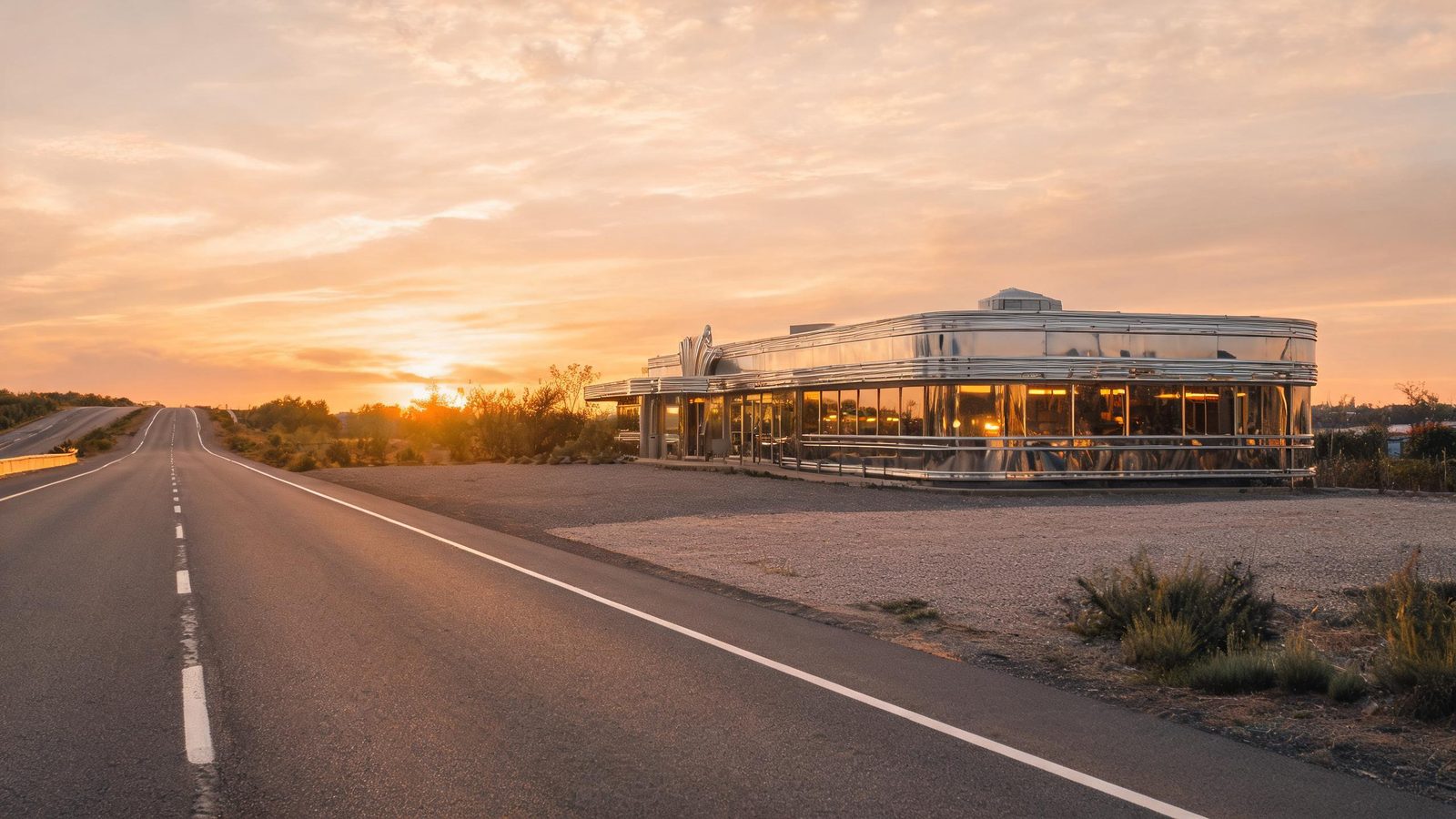
You are two hours into a drive, the next town is small, and the diner on the right has a nearly empty lot. Across the street, a chain restaurant has six cars. The choice looks obvious, but the empty diner might be the better meal.
Roadside diners are local businesses with local rhythms. A parking lot tells you who eats there and when. A menu tells you how the kitchen spends its time. A coffee pot tells you whether anyone cares about the small things.
Read the parking lot before you pick a road trip diner
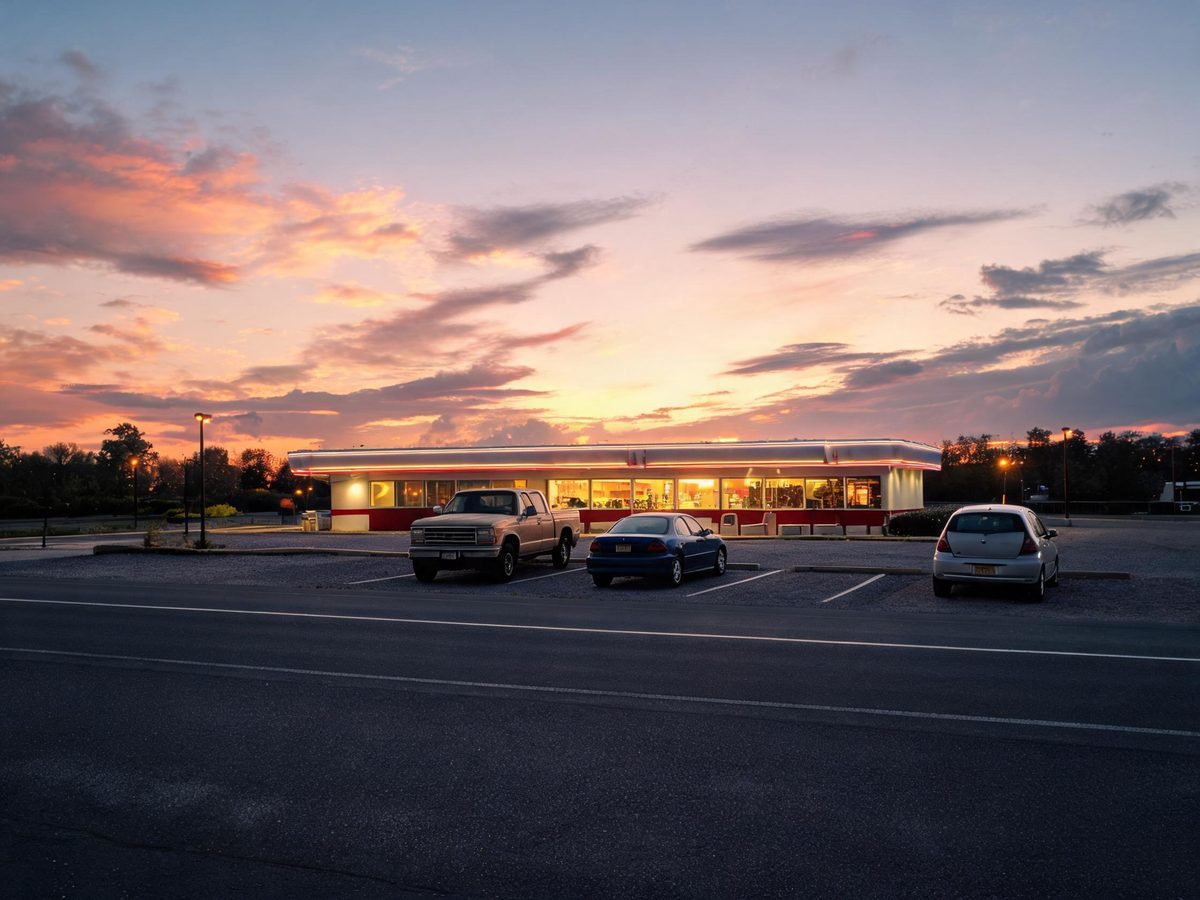
A mix of work trucks, local sedans and one out-of-state plate is a good sign. It means the diner serves people who live nearby and people passing through. A lot full of only tourist vans can mean a stop built around convenience, not cooking.
Time of day matters. A diner that is empty at noon on a weekday may be new, struggling, or simply between breakfast and lunch crowds. A diner that is busy at 3 p.m. usually has a reason.
Look at the cars, not the building. A faded exterior can hide a well-run kitchen. A polished exterior can hide a menu built for people who will not return.
What menu size says about a roadside diner
A diner with a short menu and a few daily specials is usually cooking what it knows. A diner with a 12-page laminated menu covering Thai food, pizza and steak is usually reheating a lot of it. That does not make the food unsafe; it makes the cooking less focused.
Look for a breakfast section that runs all day, a rotating specials board, and a pie case that is actually being used. Those are signs of a kitchen with a routine. Look for a menu with photographs of every dish and prices ending in .99; that is a different business model.
Coffee and the small signals
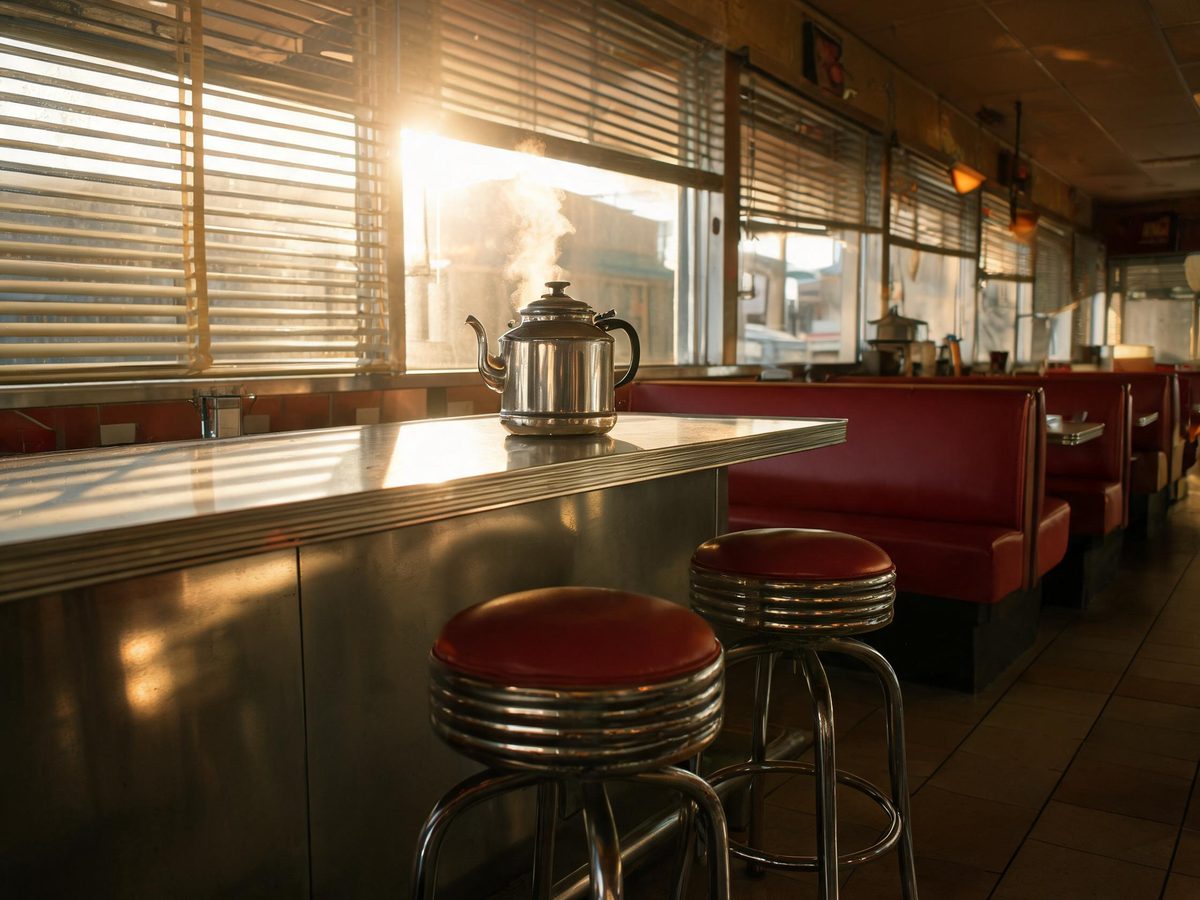
The first cup of coffee tells you a lot. Is it fresh, or has it been on the burner since 6 a.m.? Does the server offer a refill without being asked? Is the mug clean? These are small things, but they reflect attention.
Watch how the server handles a regular. If they remember an order, the diner has a community. If every interaction feels scripted, you are in a restaurant that happens to have booths.
Ask what is made in-house. Pie, biscuits, gravy and soup are common answers. If everything is “from our supplier,” you can still have a good meal, but the diner is not the reason to stop.
Health scores and food safety on the road
Many jurisdictions require restaurants to post a health inspection score or letter grade. If the score is visible, read it. A low score is not automatically a reason to leave, but it is a reason to look at the kitchen and the restroom. A missing score may mean the local rules do not require posting, not that the diner is hiding something.
You can usually find inspection results on the county health department website. A quick search before you order is more useful than a gut feeling. Look at the date of the inspection and the specific violations, not just the number.
Food safety basics still apply: hot food should be hot, cold food should be cold, and the restroom should be clean. If the counter is dirty and the staff is handling food with bare hands in a way that looks careless, leave. No diner is worth a stomach illness on a road trip.
What to order at a road trip diner
Breakfast is the safest bet in an unfamiliar diner. Eggs, pancakes, biscuits and gravy are inexpensive to cook and hard to fake. A diner that cannot make a decent breakfast is unlikely to excel at a complicated dinner.
If you stop for lunch, choose a simple sandwich, a soup of the day, or a plate that the menu describes in plain terms. Avoid the dish with twelve ingredients and a fancy name; it is often the one the kitchen has the least practice making.
- Breakfast: eggs, pancakes, biscuits, hash browns, coffee.
- Lunch: a burger, a club sandwich, soup and a half sandwich.
- Dessert: pie from the case, not the freezer.
- Drink: coffee or iced tea; skip the complicated cocktail in a diner.
- Condiment: use what is on the table; ask for hot sauce if the region is known for it.
Counter etiquette on a road trip
If the diner has a counter, sit there. You will get faster service, a view of the kitchen, and a better sense of the place. Do not camp during a rush. If people are waiting, finish your coffee and let the seat turn.
Tip as you would in any full-service restaurant. Cash is useful in small diners, but cards are usually accepted. If the diner is a cash-only institution, there is often an ATM inside; check before you order.
The rule of the roadside diner
Park, look at the lot, read the menu, and order what the town orders. Leave room for pie if the case looks fresh.
Sources and further reading
About the author
Colin Reyes
Colin writes about regional foodways, restaurant operations and how to order well without guessing. He spends his weekends at counters, market stalls and barbecue pits.
Food and regional reporting · Kansas City, Missouri