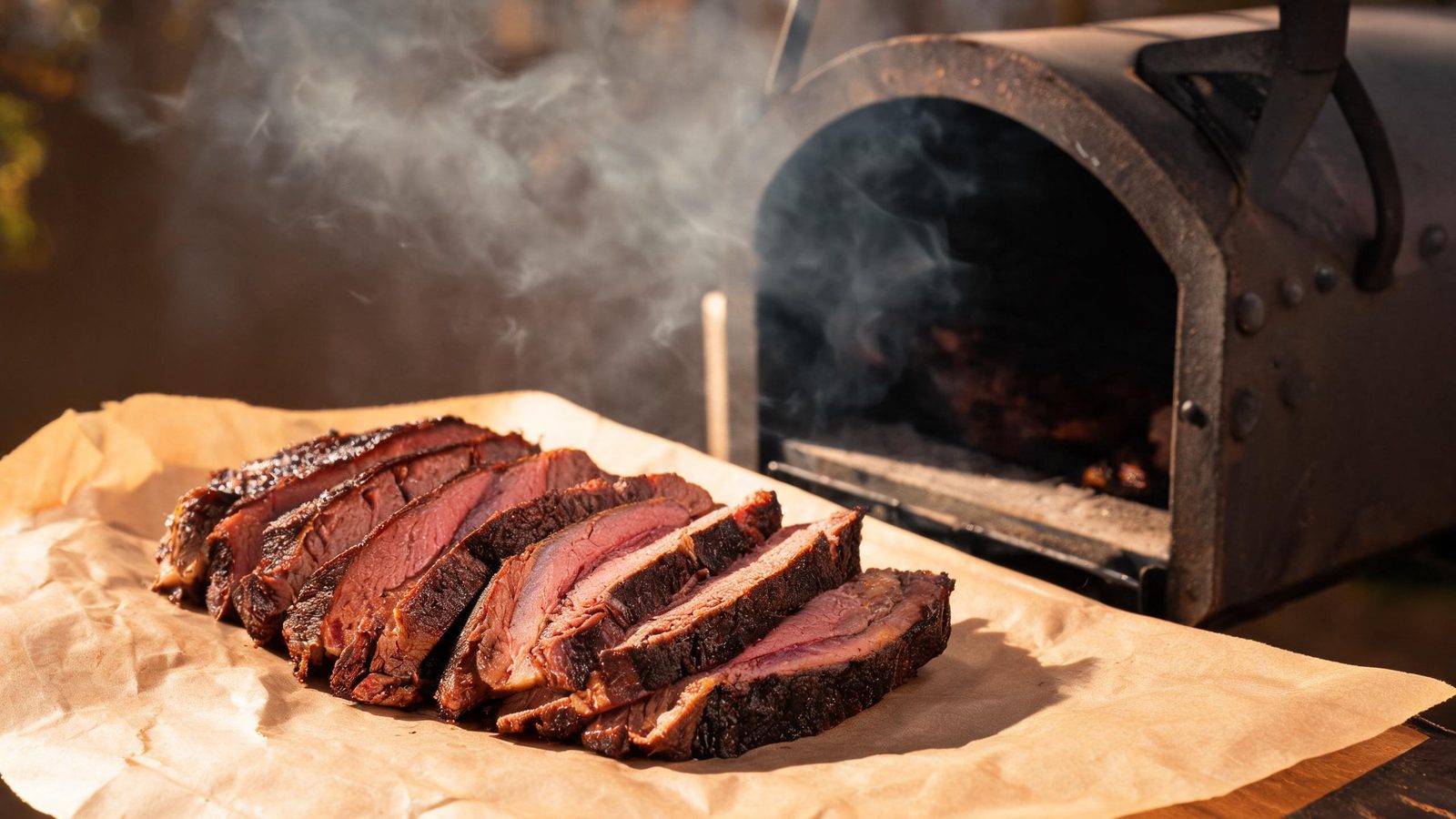
The counter at a serious barbecue joint moves fast. A cutter asks what you want, weighs it on butcher paper, and moves to the next person. If you hesitate, the line behind you notices. If you order the wrong cut, you notice at the table.
Ordering by the pound is simpler when you know two things: how much meat a person actually eats, and which cut you are asking for. The rest is sauce and sides.
How much barbecue by the pound to order
A useful starting point is half a pound of meat per adult, plus sides. That is enough for a normal appetite and leaves room for a shared item. A group of four can order two pounds of mixed meat and be comfortable; a group of six may want three pounds, especially if the meat is the main event.
Brisket loses volume as it cooks and slices. A half pound of sliced brisket looks smaller than a half pound of pulled pork. If you are feeding a crowd, order by the pound and add a rack of ribs or a few links rather than trying to calculate exact portions.
Children eat less. Do not use the adult estimate for a table with young kids. Order a small amount, then add more if the pit still has it. Running out of meat is a worse outcome than running out of appetite.
Brisket flat, point, and how to ask at the counter
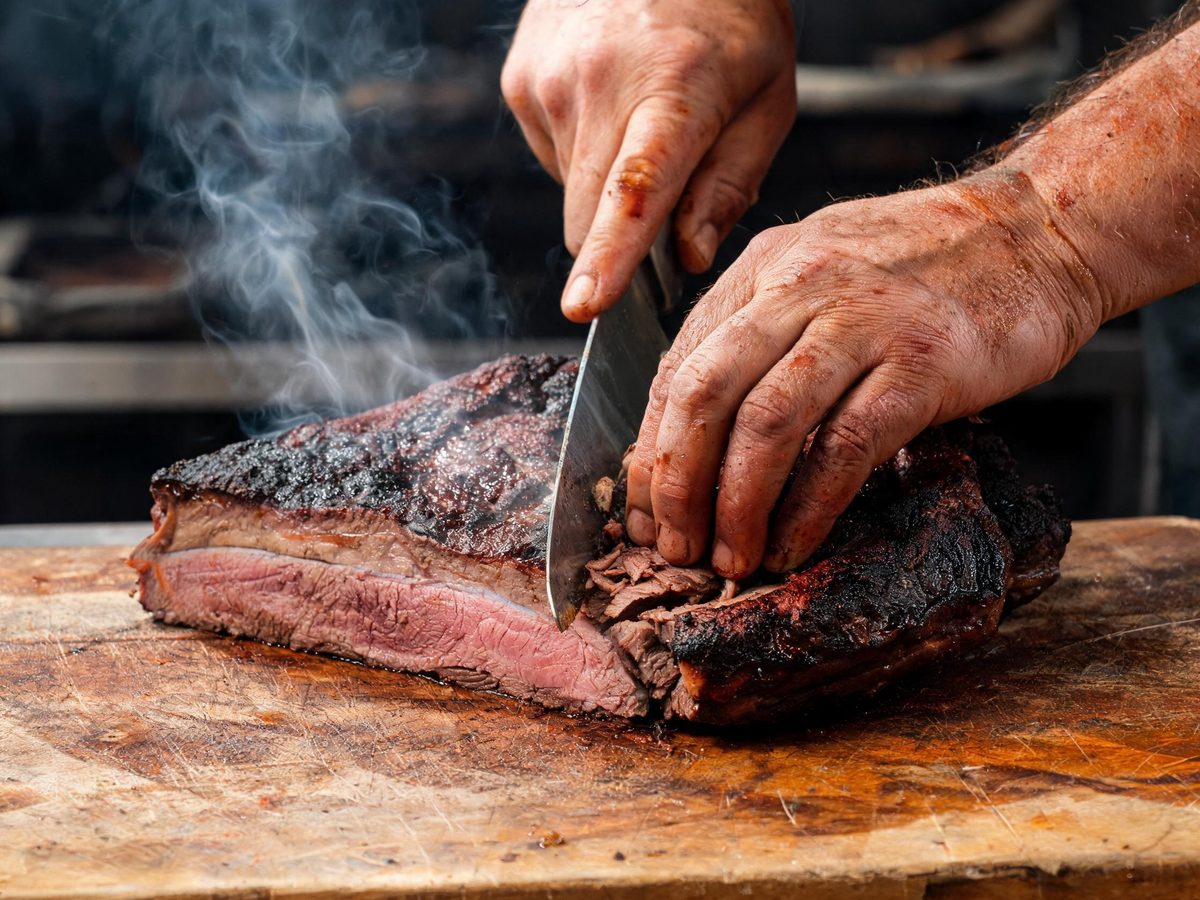
Brisket has two main sections. The flat is leaner and slices neatly. The point is fattier, more marbled and often more forgiving. A good counter will ask whether you want lean or moist, or flat or point.
“Moist” usually means point or a mix with more fat. “Lean” means flat. If you are ordering for a sandwich, lean is easier to handle. If you are eating it plain, point has more flavor and richness.
Ask for “a mix” if you want both. Ask for the bark if you care about the crust; some places reserve the ends for burnt ends, and some will sell them by the piece.
Ribs, sausage and the rest of the barbecue counter
Ribs are usually sold by the half rack or full rack, not by weight. A half rack feeds one or two people depending on appetite. Ask whether the ribs are spare or baby back; the texture and fat content differ.
Sausage is sold by the link or the pound. A link is a good add-on for a group. Ask what is in it: beef, pork, jalapeño, cheese, or a regional blend. If you have dietary restrictions, ask before you commit.
Pulled pork is the most forgiving order. It is usually sold by weight and reheats well. It is a good choice for a group with mixed preferences, and it does not require a cut decision.
Barbecue sauce is regional, not universal
North Carolina favors vinegar and pepper. South Carolina has a mustard-based tradition. Kansas City leans toward a thick, sweet tomato sauce. Memphis is known for dry rubs and sauce on the side. Texas often serves sauce on the side, or none at all.
Do not ask for ranch at a traditional Texas pit and expect a warm response. Do ask what the house recommends. A good pit will tell you whether the meat is meant to be eaten plain.
If sauce is on the table, use it sparingly. A well-smoked brisket does not need much. A dry rib can use a little more.
When the barbecue runs out before you order
Good barbecue often sells out because the pit cooks a finite amount. That is a feature, not a flaw. Arrive early, or pre-order if the pit allows it. Many places take pre-orders for whole briskets, racks or family packs.
If you arrive late and the brisket is gone, do not ask the cutter to “find some.” Ask what is still good. A good counter will steer you toward the sausage, the pork or the ribs rather than stretch a shrinking brisket.
Eating barbecue at the pit
Order at the counter, take a number, and find a picnic table. Do not expect a host to seat you. Do not expect a menu with photographs. The pace is part of the experience.
Bring cash if the pit is old-school, and check the hours before you drive. Many pits close when the meat runs out, not at a fixed time. A “open until sold out” sign is a warning, not a marketing line.
Tip the counter staff if there is a jar, especially if they carried a heavy tray to your table. The cutter is doing skilled work, and the line moves because they are fast.
Reheating barbecue without ruining it
If you take meat home, reheat it gently. Brisket and pulled pork do well in a covered pan with a splash of liquid at low heat. Ribs can be wrapped in foil and warmed in an oven. Avoid the microwave on full power; it turns bark into leather.
Store leftovers within two hours, and refrigerate what you will not eat that day. Barbecue is rich, but it is still meat. Food-safety rules apply.
A simple barbecue order for four
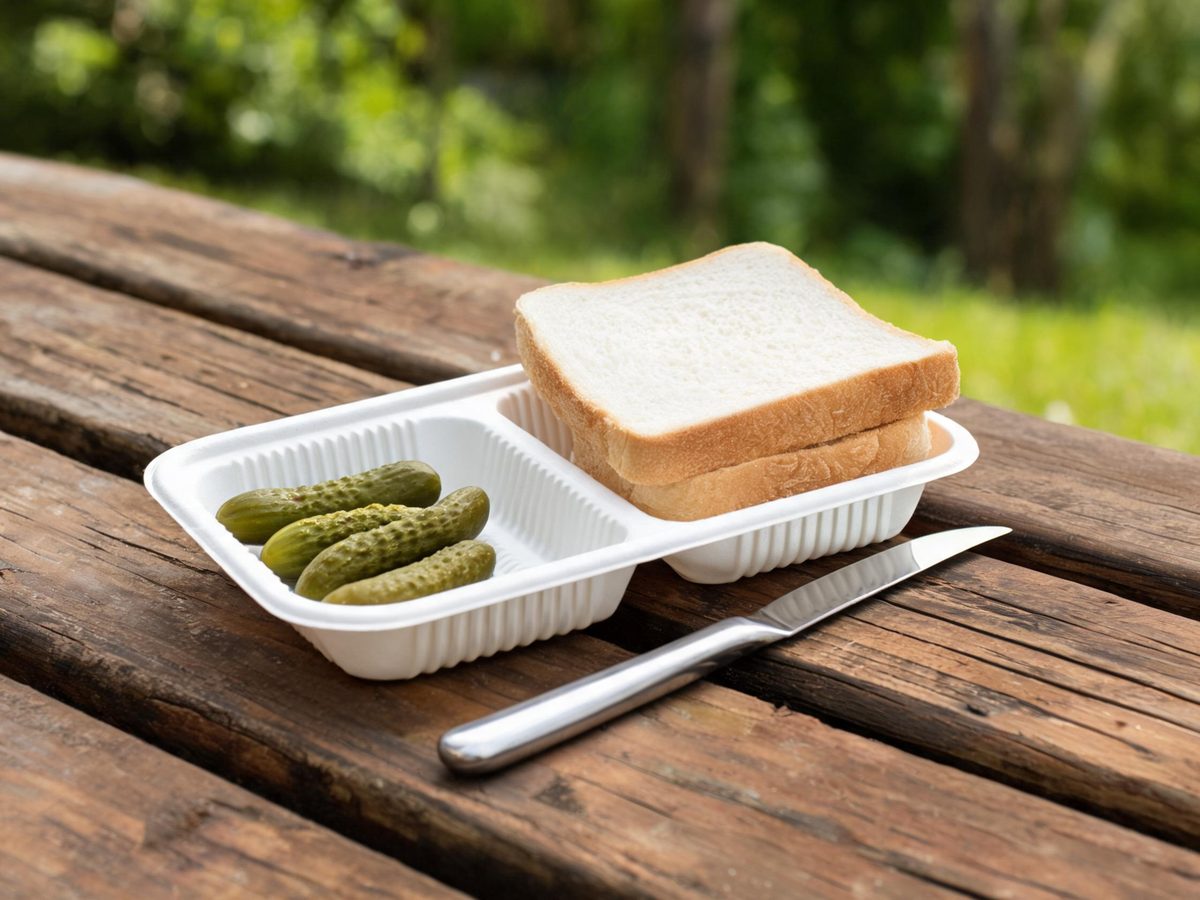
One pound of brisket, half a pound of pulled pork, one link of sausage, a half rack of ribs, two pints of sides, pickles and bread. That is a comfortable table with a little leftover. Ask for lean and moist brisket so everyone gets a slice they like. Order sides after the meat is weighed; that is when the counter can tell you what is still available.
Sources and further reading
About the author
Colin Reyes
Colin writes about regional foodways, restaurant operations and how to order well without guessing. He spends his weekends at counters, market stalls and barbecue pits.
Food and regional reporting · Kansas City, Missouri