An apartment cat can have a rich life in 500 square feet. The limit is usually not floor area. It is vertical space, novelty and the number of decisions the cat is allowed to make.
Indoor cats get food without hunting, water without searching and a warm bed without building one. Enrichment puts some of that back: things to climb, watch, stalk, scratch and solve. The goal is a cat that uses its body and its brain every day.
An apartment cat needs height
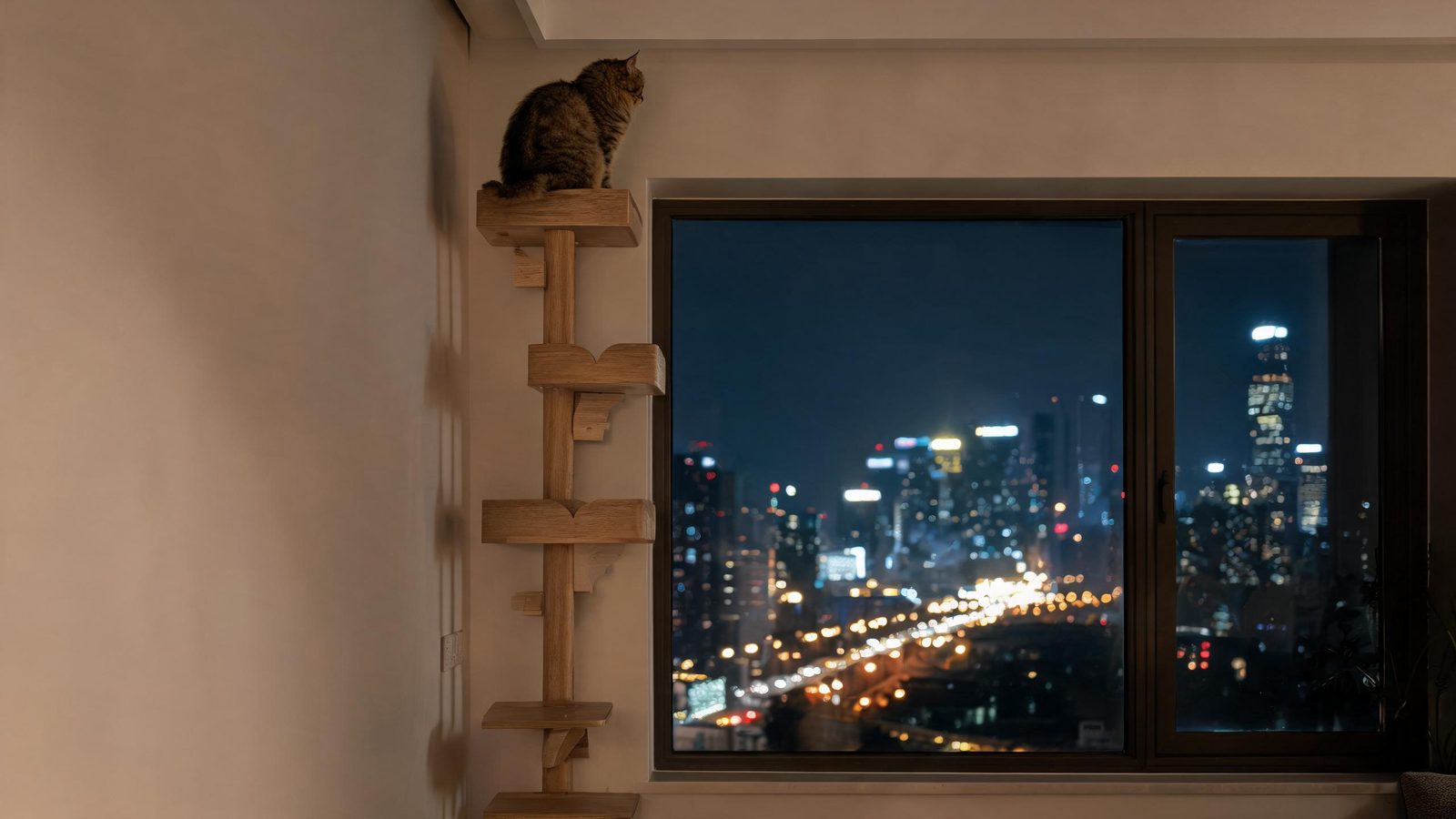
Cats think in three dimensions. A tall shelf, a window perch, a cat tree by the wall and a clear path to the top give a cat a sense of territory. In a small apartment, vertical space is the cheapest square footage you can add.
Mount shelves at different heights, with gaps the cat can jump. Make sure the top perch is stable and has a view. Avoid placing a perch where the cat is trapped by a window that opens onto a busy street; a screen and a secure latch matter.
If you rent, use tension-mounted or adhesive options that do not damage the wall. Check the weight limit. A cat jumping onto a floating shelf puts more force on the mount than a static cat.
Windows and the apartment cat's view
A window perch with a view of birds, trees or a sidewalk is cat television. Add a bird feeder outside if your building allows it; the movement is more interesting than a static street.
Keep the window screen secure. Cats can push out a loose screen. If the window opens, use a window guard or a top-down vent position that a cat cannot pass through.
Do not let a cat sit on a hot radiator or a windowsill that gets direct sun all afternoon. Provide shade and water nearby. A cat will move when it is uncomfortable, but a small apartment may not offer another cool spot.
Play that lets an indoor cat hunt
A wand toy is the most useful enrichment tool. Move it like prey: along the floor, behind a chair, up a shelf, then let the cat catch it. End the session with a successful catch and a small treat. A cat that never catches the toy gets frustrated.
Two short sessions a day are better than one long session. Ten minutes in the morning and ten in the evening fits most schedules. Play before meals, then feed. The sequence mimics the hunt-eat-sleep rhythm.
Rotate toys. A toy that stays on the floor becomes furniture. Put some away for a week, then bring them back. A paper bag, a cardboard box and a crumpled receipt can be more interesting than a new plastic toy.
Food puzzles for an apartment cat
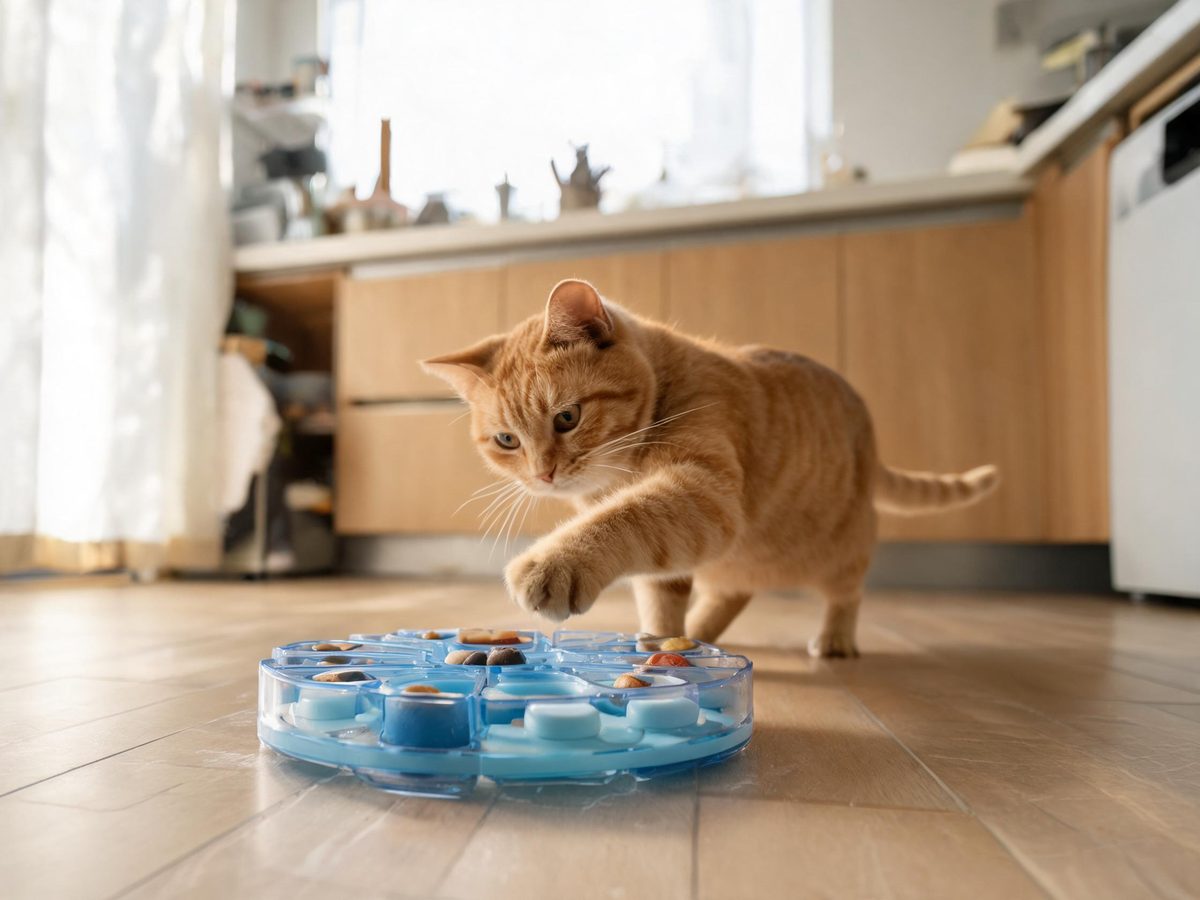
Puzzle feeders, treat balls and scattered kibble give a cat something to solve. Start easy: a shallow puzzle with visible treats. Increase difficulty only when the cat succeeds quickly.
If the cat is on a prescription diet, ask the vet before changing how food is delivered. A puzzle feeder should not reduce the total amount the cat eats.
Some cats prefer to work for food; others ignore puzzles. Watch the cat, not the product description. A puzzle that sits untouched is clutter.
Scratching, hiding and resting
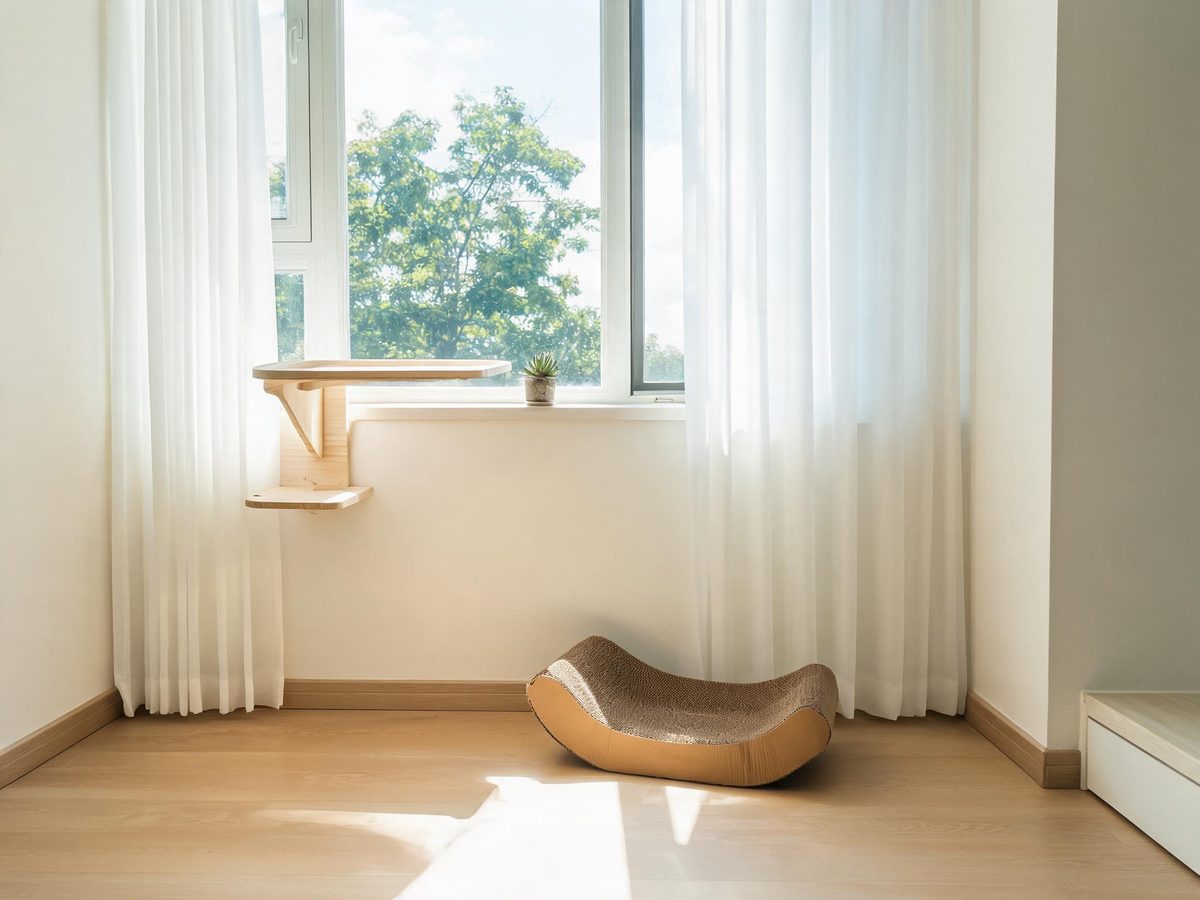
Cats scratch to mark territory and to maintain their claws. Provide a sturdy vertical scratcher, a horizontal cardboard scratcher and a surface with the texture the cat prefers. Place them near the areas the cat already uses.
A cat needs hiding places. A covered bed, a box with a blanket, or a quiet corner behind a chair can serve. Do not drag the cat out of a hiding spot; let it choose when to emerge.
Resting spots should be warm, high or hidden. A cat bed in the middle of a busy room is less appealing than a bed on a shelf. Offer more than one option and let the cat decide.
A daily indoor-cat routine
- Morning: short play session, then breakfast from a puzzle or bowl.
- Midday: window time, a rotated toy, fresh water.
- Evening: interactive play, then dinner.
- Night: quiet time, a comfortable sleeping spot, litter box clean.
The routine does not need to be rigid. It needs to be predictable enough that the cat knows what comes next. Predictability reduces stress in a small space.
When enrichment is not enough
Hiding, overgrooming, pacing, aggression, spraying or refusing food can be signs of stress or illness. A vet visit should come first, especially if the behavior is new. A behavior professional can help with a plan if health is ruled out.
Do not add more toys to fix a problem. Add structure, space and a vet check. A cat that feels in control of its territory is easier to live with than a cat surrounded by unused purchases.
The apartment cat rule
Give the cat height, a window, a daily hunt, a scratching post and a place to hide. Overgrooming, hiding or a stopped appetite call for a vet visit before another toy.
Sources and further reading
About the author
Priya Raman
Priya covers everyday animal care, shelter adoptions and the practical side of sharing a home with pets. Her guides focus on setup, routine and when to call a veterinarian.
Pets and household care · Atlanta, Georgia