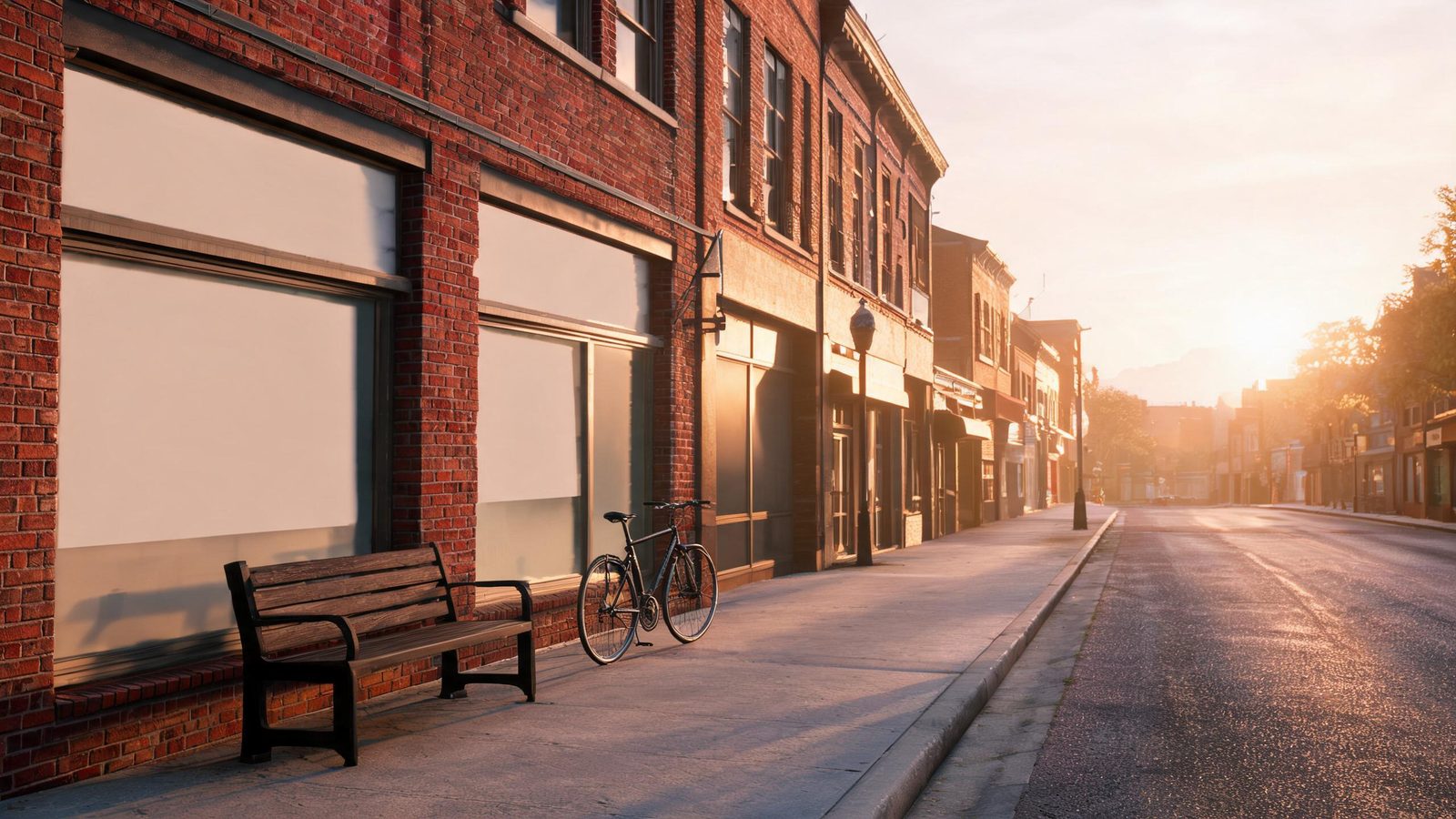
A small city can be harder to visit than a big one. The attractions are spread out, the restaurants close early, and the local paper is the only reliable guide. The temptation is to build a checklist from a travel site and spend the weekend driving between three blocks of highlights.
The three-block rule is simpler. Pick the downtown core, walk three blocks in every direction, and let the town show you what it has. You will miss fewer things and spend less time in the car.
Find the core of a small city
Look for the main street with the oldest buildings, the library, the post office, a coffee shop and a hardware store. That is usually the core. In a small city, the downtown may be one street or a square; in a larger one, it may be a few blocks around a park.
Park once. Choose a lot or a garage near the core and leave the car. A small city is often more walkable than it looks on a map, and parking downtown is usually easier than parking at a single attraction.
Check the town's event calendar before you go. A farmers market, a high school football game or a street fair can change the rhythm of the weekend. It can also fill the restaurants.

Walk a small city before you plan
On the first morning, walk the core without a destination. Notice what is open, what looks busy, and what the locals are doing. A hardware store with a community board is a good source of information. A coffee shop with a line at 8 a.m. is a good place to ask what is worth doing.
Walk three blocks in each direction from the main intersection. That is usually enough to find the historic district, the river or park, the library and the older residential streets. Small cities often have their best architecture just outside the commercial strip.
Take a photo of the storefronts you want to return to. Small downtowns can be hard to get around after dark, and a phone photo is easier than a mental map.
One museum, one meal, one walk for the weekend
Do not try to see every attraction. Pick one museum or historic site, one meal you are excited about, and one walk. That is a full day in a small city. The rest of the time is for coffee, a bookstore and a bench.
Check museum hours before you build the day around one. Many small museums are open only Wednesday to Saturday, or only in the afternoon. A local history museum may be staffed by volunteers and close unexpectedly.
For the meal, ask a local rather than a review site. A diner that is busy at lunch, a bakery with a line, or a restaurant with a handwritten specials board is a better signal than a star rating. Make a reservation if the place is small.
Where to stay for a small city weekend
Stay in or near the core. A hotel on the main street is more useful than a chain motel by the highway, even if it costs a little more. You can walk to dinner, return to the room, and walk out again without driving.
If the core has no hotel, look for a bed and breakfast, a guesthouse or a rental within a few blocks. Check parking and check-in time. A place that looks close on a map may be a 20-minute walk along a road with no sidewalk.
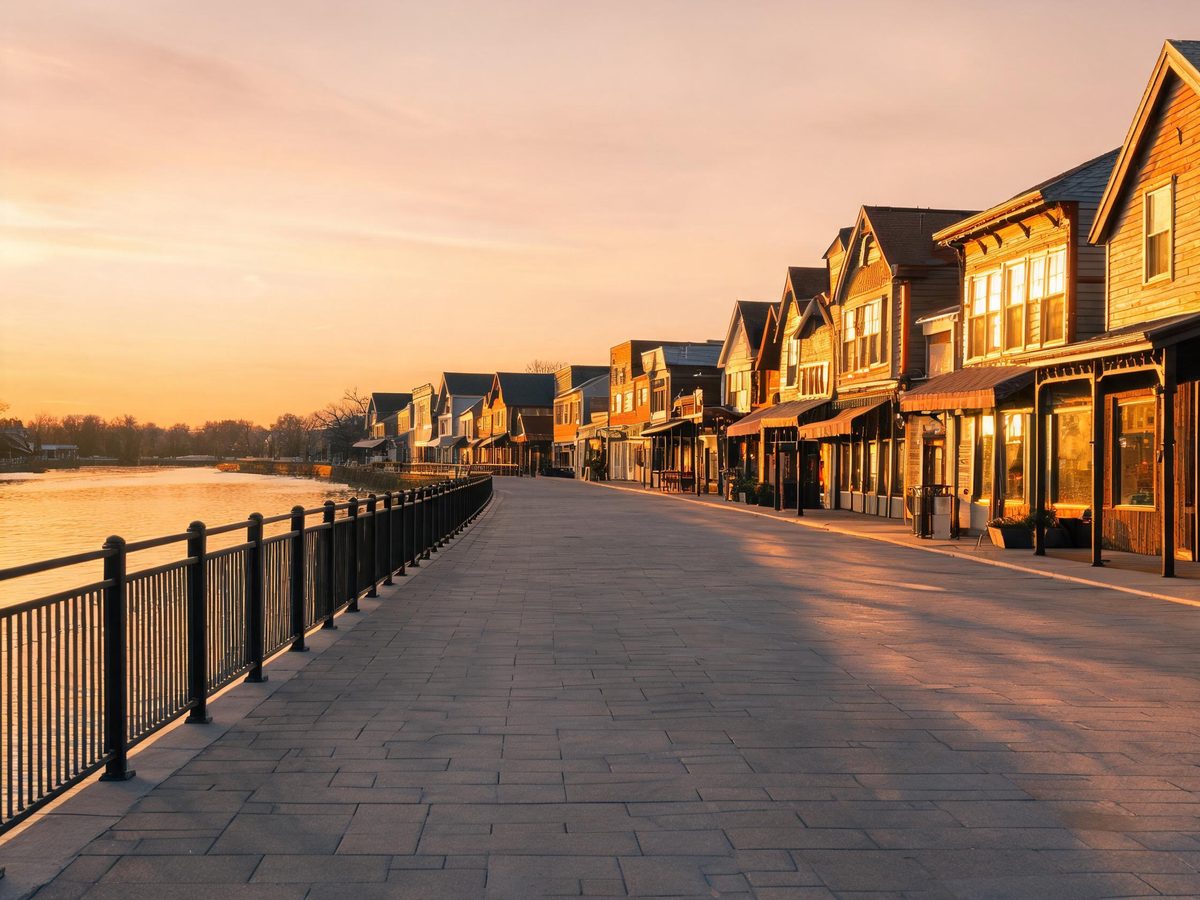
Driving outside the small city core
Some of the best things in a small city are outside the three blocks: a state park, a battlefield, a factory tour, a farm stand. Pick one for the second day. Drive there in the morning, then return to the core for lunch and a walk.
Check the drive time and the road type. A 15-mile farm road can take 30 minutes. A scenic byway can take an hour. Do not schedule a distant attraction and a downtown dinner in the same two-hour window.
A two-day small city weekend
- Friday evening: arrive, park once, walk the core, eat near the hotel.
- Saturday morning: coffee, one museum or historic site, walk three blocks in each direction.
- Saturday afternoon: a park or river walk, a bookstore, a local bakery.
- Saturday evening: the meal you planned, booked ahead if possible.
- Sunday morning: one drive outside the core, then lunch and the road home.
The template is deliberately loose. A small city is not a theme park. The point is to slow down enough to notice the town, not to collect the most photos.
What to skip on a small city weekend
Skip the chain restaurant you can eat anywhere. Skip the attraction that requires a two-hour drive for a 20-minute visit. Skip the itinerary that leaves no time for a second cup of coffee. The best small-city weekends are usually the ones with the least driving.
Pick the core, walk it, ask a local where to eat, and leave one afternoon unplanned. The unplanned hour is usually the one you remember.
Sources and further reading
About the author
Dana Whitfield
Dana writes about rail, road trips and public lands, with an eye for plans that survive contact with reality. She keeps a running list of campgrounds worth a second visit.
Travel and public lands · Portland, Oregon