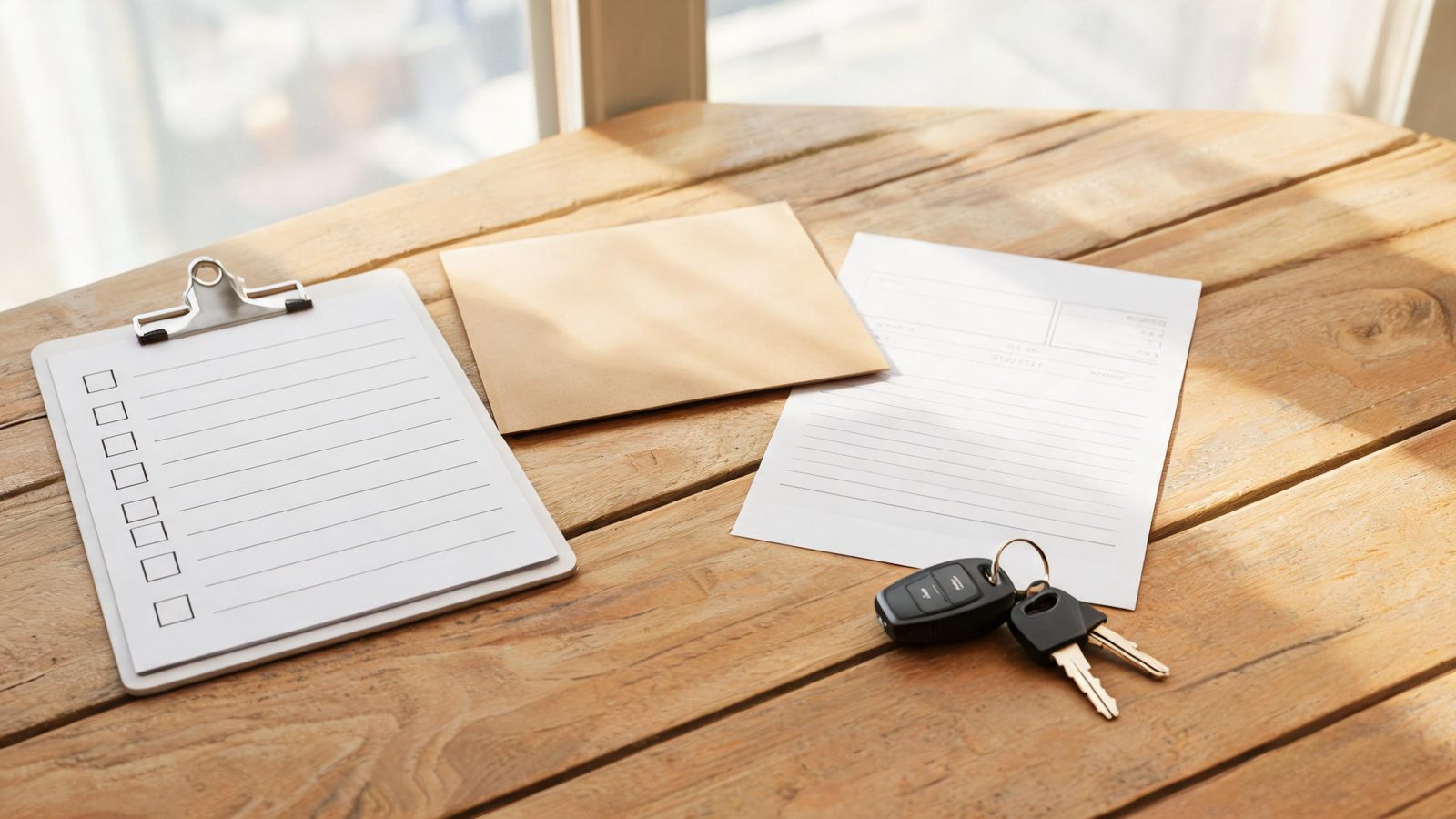
First-time license appointments fail for boring reasons. A missing envelope. A certificate printed on the wrong paper. A parent who signed the form but did not come inside. The road test gets the attention; the document check is where the day actually goes wrong.
State checklists usually organize the requirements into a few categories. Once you understand the categories, the checklist stops looking like a random list of paper.
The DMV documents behind the first license checklist
Proof of identity. A birth certificate, passport, or another document your state accepts. The document must be original or certified; photocopies are usually refused.
Proof of lawful presence. Some states combine this with identity, others ask for a separate document. A birth certificate, passport, permanent resident card, or another document your state lists may qualify.
Proof of residency. Usually two documents showing your name and address: a lease, utility bill, bank statement, school record, or insurance policy. The address must match the application.
Driver education. Applicants under 18 often need a completion certificate from an approved course, plus supervised driving hours. The hours and the certificate format vary by state.
Parental consent. A parent or guardian may need to sign the application, sometimes in person. A signature without the adult present is a common reason for rejection.
Vehicle and insurance. For the road test, bring the registration and proof of insurance for the car you will use. The car must pass a basic safety check.
DMV documents that get rejected for a first license
A photocopy of a birth certificate. Offices generally want the certified copy, not a scan or a photocopy.
A bank statement with a P.O. box. Residency documents usually need a physical address. A P.O. box may not count.
A lease in a parent's name only. If you are applying as an adult, the lease should show your name. If you are a minor, a parent's document may satisfy the residency requirement, but the rules differ.
An expired insurance card. Check the dates. A card that expired last month is not proof of current coverage.
A certificate from an online course the state does not recognize. Confirm the course is approved before you pay for it.
A name that does not match. A middle name on one document and an initial on another can require extra proof. Bring the document that connects the names.
Build the folder before the appointment
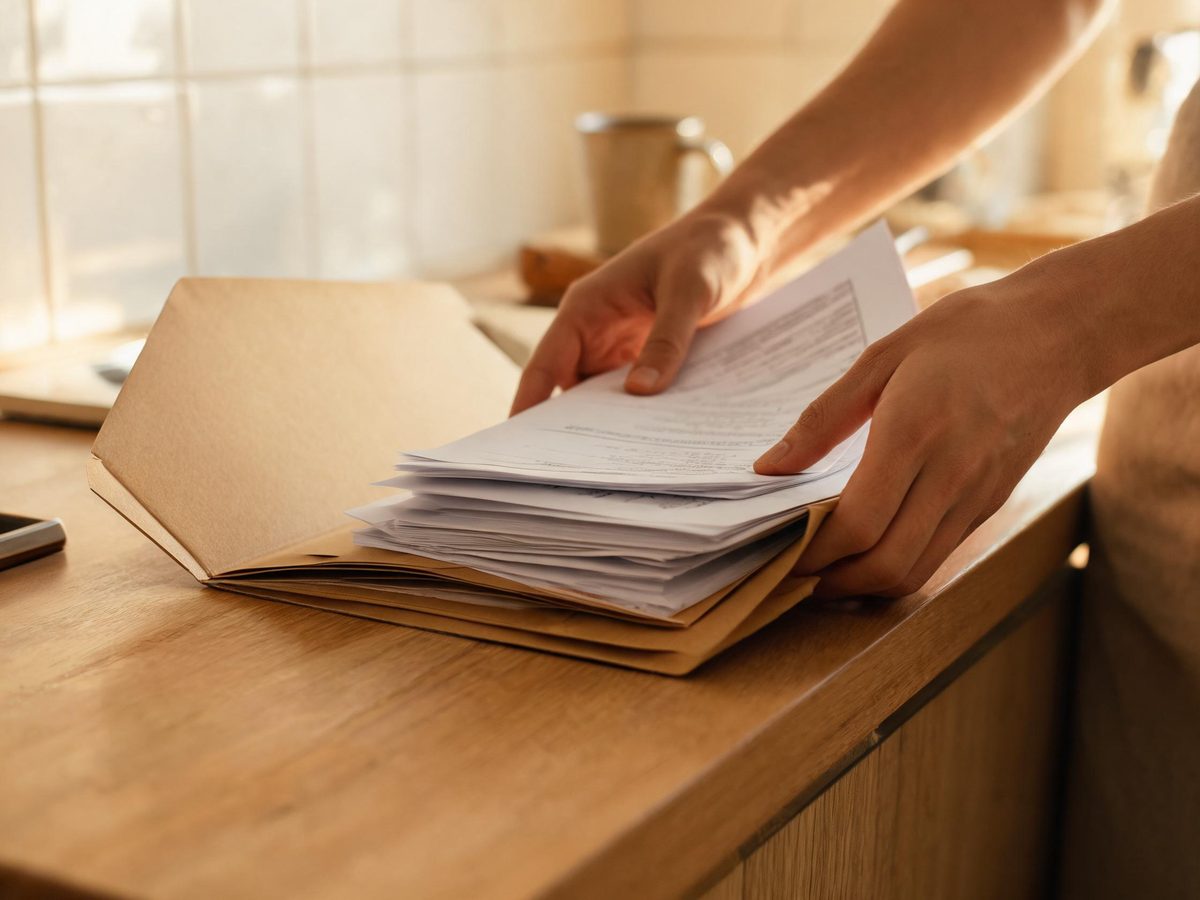
Use a simple folder with labeled pockets. Put originals on the left and photocopies on the right. Include a printed copy of the state checklist with each item ticked. Add a pen and a small notebook for the clerk's instructions.
Carry the folder to the counter; paperwork left in the car cannot be checked. If the test car belongs to someone else, confirm the registration and insurance are inside the vehicle, and confirm the owner's permission in writing if your state requires it.
Under 18: the extra DMV documents layer for a first license
Minor applicants usually face additional requirements: a learner's permit held for a minimum period, supervised driving hours, a driver education certificate, and parental consent. Some states require a log of hours signed by a parent. Keep the log in the same folder as the certificate.
If your birthday falls near the appointment, check the age cutoffs. A learner's permit issued at 15 and a license at 16 are common patterns, but the exact rules and waiting periods are state-specific.
First license DMV documents at the appointment
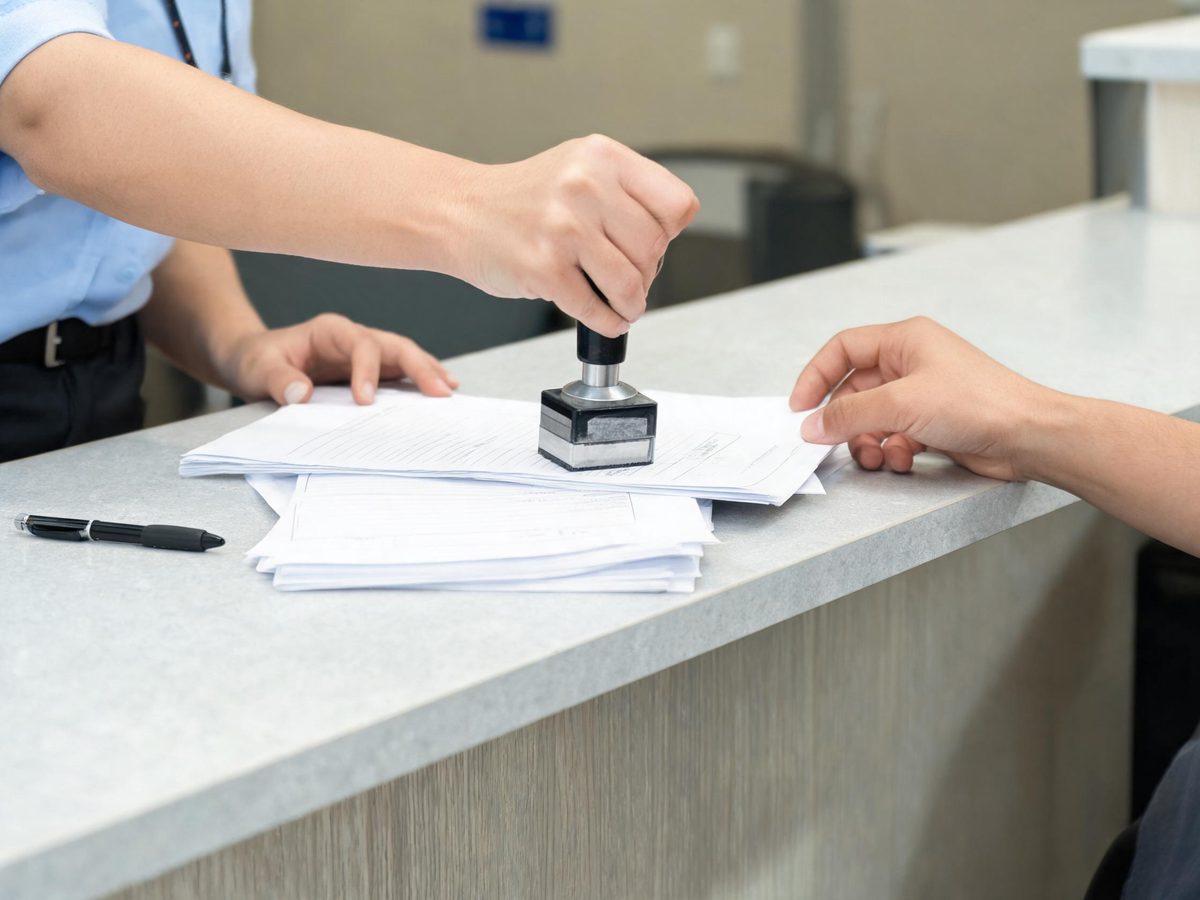
Arrive early. Take a number or check in at the kiosk. When your number is called, hand over the folder rather than a loose stack. Let the clerk work through it; do not volunteer documents they did not ask for. If something is rejected, ask for the exact requirement and write it down.
After the paperwork, you may take a vision test, a knowledge test, and the road test. Some states schedule these separately. Confirm which portions happen on the same day so you do not leave without completing the process.
After the first license DMV documents are accepted
Check the temporary license for spelling, date of birth and restrictions. Verify the mailing address. If you have a conditional license or a restriction, read the fine print before you drive alone. Keep the folder until the permanent card arrives; you may need the documents again if the card is delayed.
Photograph the front and back of the temporary license and keep the images in your phone until the permanent card arrives. If you move before it is delivered, update the address with the DMV immediately, because a card sent to an old apartment can take weeks to recover. Do not laminate the temporary paper; many offices treat a laminated copy as invalid.
Keep the folder for the next appointment, too. Renewals and address changes ask for some of the same paper.
Sources and further reading
About the author
Maya Ortiz
Maya reports on licensing, road rules and the paperwork that slows people down. Her work for Vextor Times focuses on what state agencies actually ask for, and what happens when a form is missing.
Driving and consumer rules · Sacramento, California