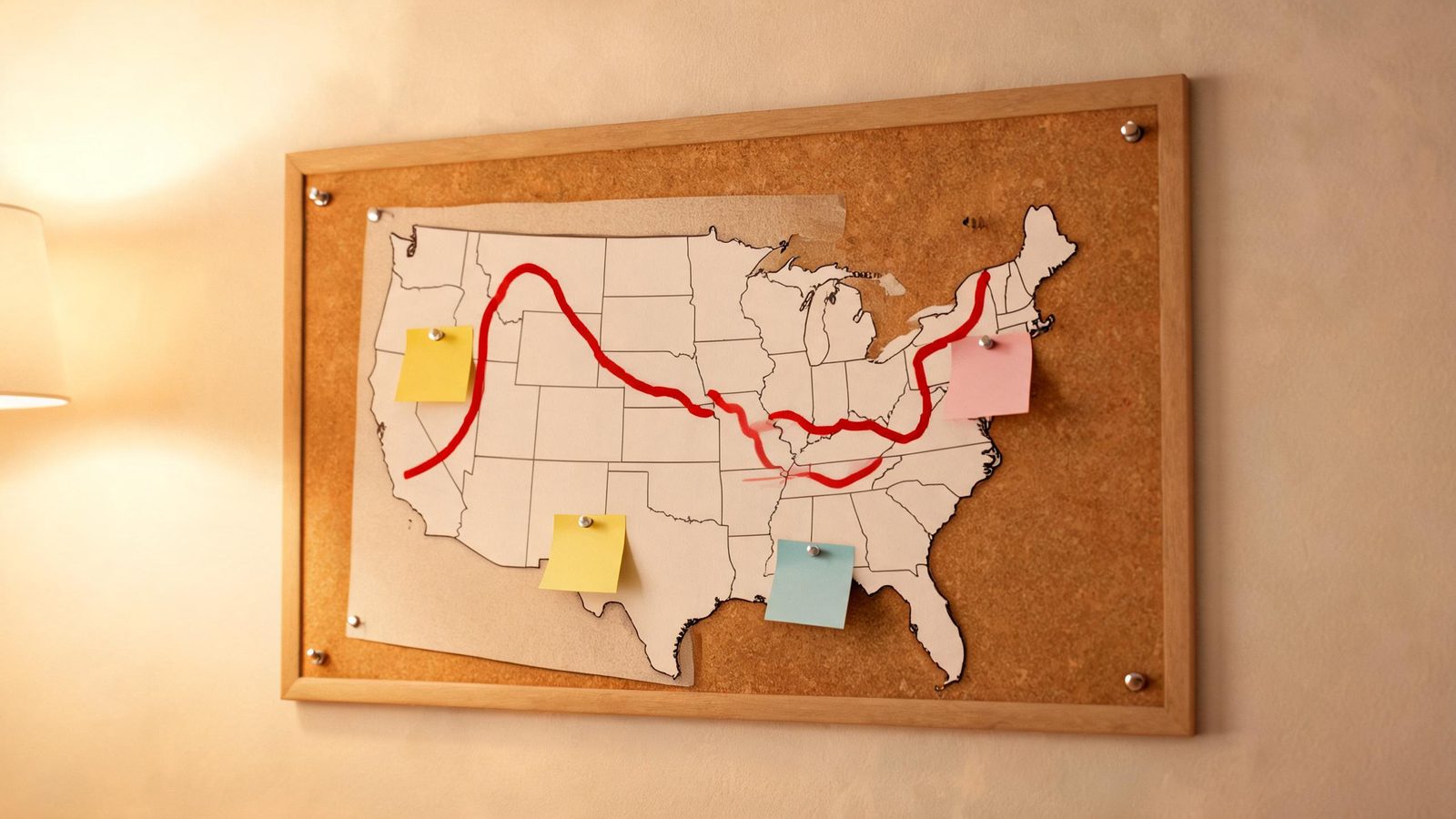
Two learners can study the same handbook, practice the same maneuvers, and face different tests. Driving is regulated at the state level, and the differences go beyond the shape of the license card. Permit ages, supervised hours, night restrictions and even whether parallel parking appears on the test all vary.
If you are moving states, helping a teenager learn, or preparing after a lapse in licensing, the first step is to read the current handbook for the state where you will test. The second step is to ignore advice that begins with “where I grew up.”
Permit age and the waiting period by state
Many states issue a learner's permit in the mid-teens, but the exact age and the required holding period differ. Some states require the permit to be held for six months before a road test; others require a year. A few allow a shorter period for older applicants or for drivers who complete an approved course.
The waiting period is usually counted from the permit issue date, not from the date you finished driver education. Check the date on the permit and count forward before you book a test.
Supervised hours before the driving test
Graduated licensing systems often require a set number of supervised driving hours, including a portion at night. The totals range widely. Some states require a signed log; others rely on a parent's certification.
Start the log the day the permit arrives. Record the date, the duration, the weather and the road type. A log with 40 identical entries in the final week looks like what it is: a last-minute construction. Examiners and clerks may not audit every entry, but an honest log produces better practice.
Restrictions that follow the license, state by state
A provisional license often carries conditions: no passengers under a certain age, no driving after a set hour, or mandatory seatbelt rules for every occupant. These restrictions are not suggestions. A violation can suspend the license and complicate the path to a full license.
Night restrictions are common, but the start time varies. Some states begin at 9 p.m., others at 11 p.m. or midnight. Weekend hours may differ. Put the exact times in your phone calendar, and tell the household so a parent does not ask you to drive after the cutoff.
What the road test includes
Most road tests include a pre-drive vehicle check, basic controls, intersections, lane changes, turns and parking. The details vary:
- Parallel parking is required in some states, optional in others, and replaced by a different parking exercise elsewhere.
- Three-point turns may be tested on a quiet street or not at all.
- Highway driving is part of the test in some states and excluded in others.
- Manual transmission rules differ; a test in a manual car may add a restriction to the license.
- Backup cameras and parking sensors are usually allowed, but the examiner still expects mirror and shoulder checks.
Ask your examiner or state handbook which maneuvers are scored. Practicing a maneuver that is not on the test is wasted time; skipping one that is can end the appointment.
Waivers, transfers and alternative paths by state
Some states waive the road test for drivers who complete an approved driver education course, or for applicants with certain out-of-state licenses. Others offer a shortened test for experienced drivers. The waivers are narrow and change with legislation.
Do not assume a waiver applies to you because a friend used one. Read the eligibility rules on the state website and confirm with the testing office. A waived road test does not mean a waived knowledge test or document check.

Booking fees, appointments and retests in your state
Fees vary by state, by license type, and by whether you apply online or in person. Some states bundle the road test fee with the license fee; others charge separately. A failed test may require a new fee for a retest.
Appointment systems also differ. Some states require an appointment for the road test; others allow walk-ins at certain offices. The wait for the first available appointment can be weeks in busy areas. Book as soon as you are eligible, and keep the confirmation in your folder.
How to compare two state handbooks
Use a simple table. List the permit age, holding period, supervised hours, night hours, road-test maneuvers, retest policy, and document requirements. Fill each cell from the state handbook, not from a national summary. Then compare with the neighboring state if you live near a border and might test elsewhere.
State differences are not trivia. They decide when you can test, what you practice, and how long you wait after a failure. Start with the current handbook and the agency appointment page. A national summary can point you to questions, but it cannot settle them.
Sources and further reading
About the author
Maya Ortiz
Maya reports on licensing, road rules and the paperwork that slows people down. Her work for Vextor Times focuses on what state agencies actually ask for, and what happens when a form is missing.
Driving and consumer rules · Sacramento, California