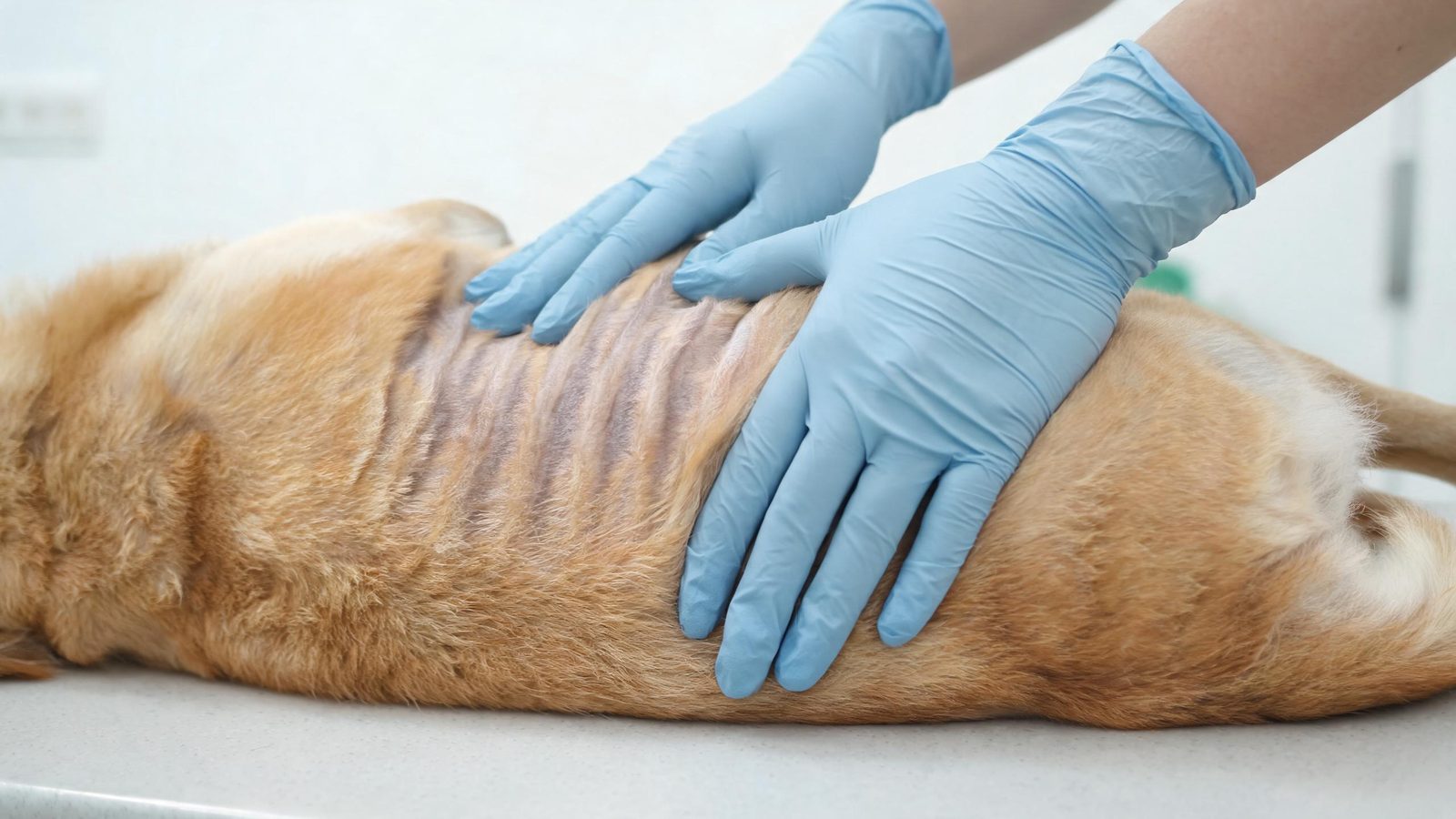
At the vet's office, the technician runs a hand along the dog's ribs and says “body condition score of six.” It sounds like a grade. It is closer to a map: a nine-point scale used to describe how much fat sits over the ribs, spine and hips.
The score is not about appearance. A show dog and a rescue dog can have the same score. The question is whether the dog carries the right amount of weight for its frame, and whether that weight is changing.
How the body condition score scale works
Most clinics use a nine-point scale. A score of four or five is ideal for many dogs. One or two is too thin; eight or nine is obese. The middle numbers describe a gradual change from visible ribs to ribs buried under fat.
The scale is a tool for consistency, not a precise measurement. Two clinicians may score the same dog slightly differently. The trend matters more than a single number.
| Score | What you can feel and see |
|---|---|
| 1 to 2 | Ribs, spine and hip bones visible; no fat cover; very thin |
| 3 | Ribs easily seen and felt; little fat; thin |
| 4 to 5 | Ribs easily felt with a thin fat cover; waist visible from above; ideal for many dogs |
| 6 | Ribs felt with slight pressure; waist less obvious; slightly overweight |
| 7 to 9 | Ribs hard to feel; no waist; fat deposits over the spine and tail base; obese |
A hands-on body condition score check
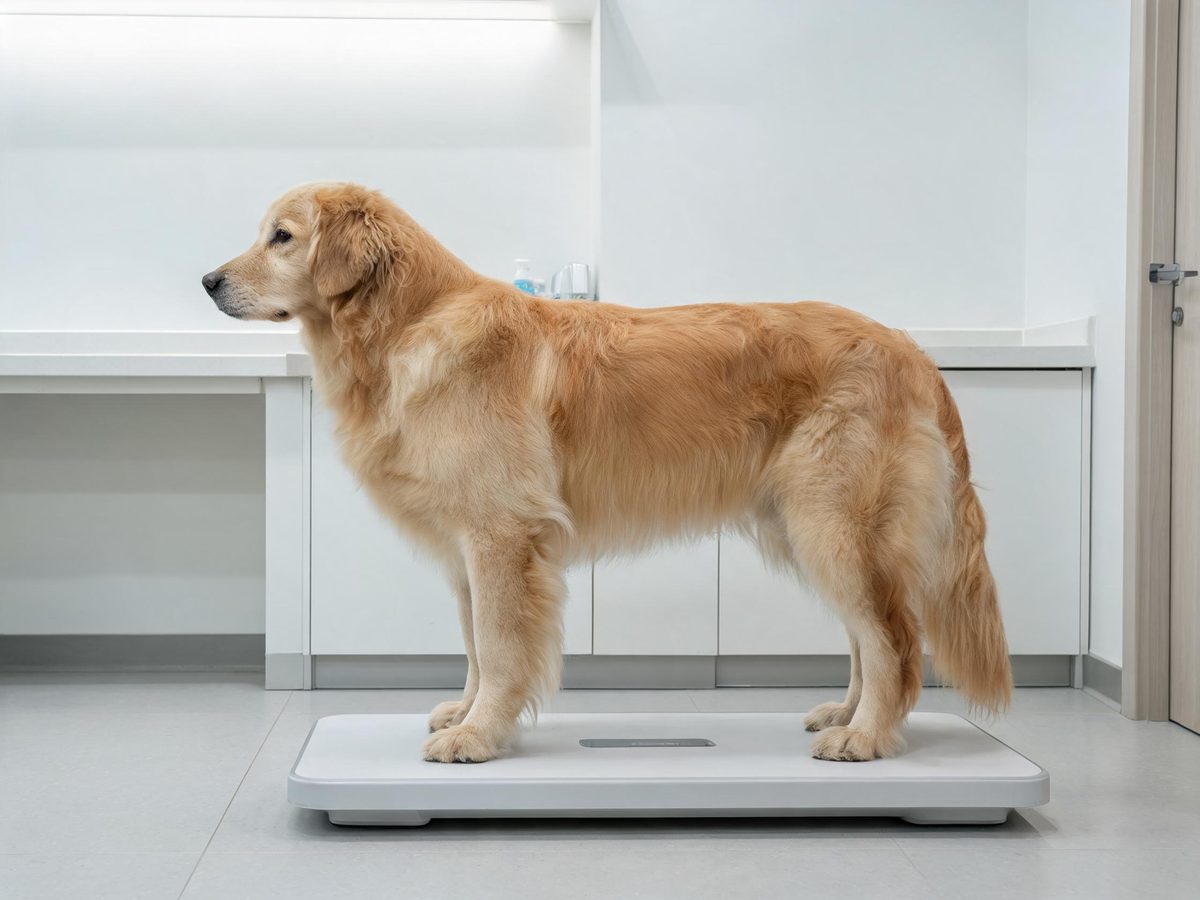
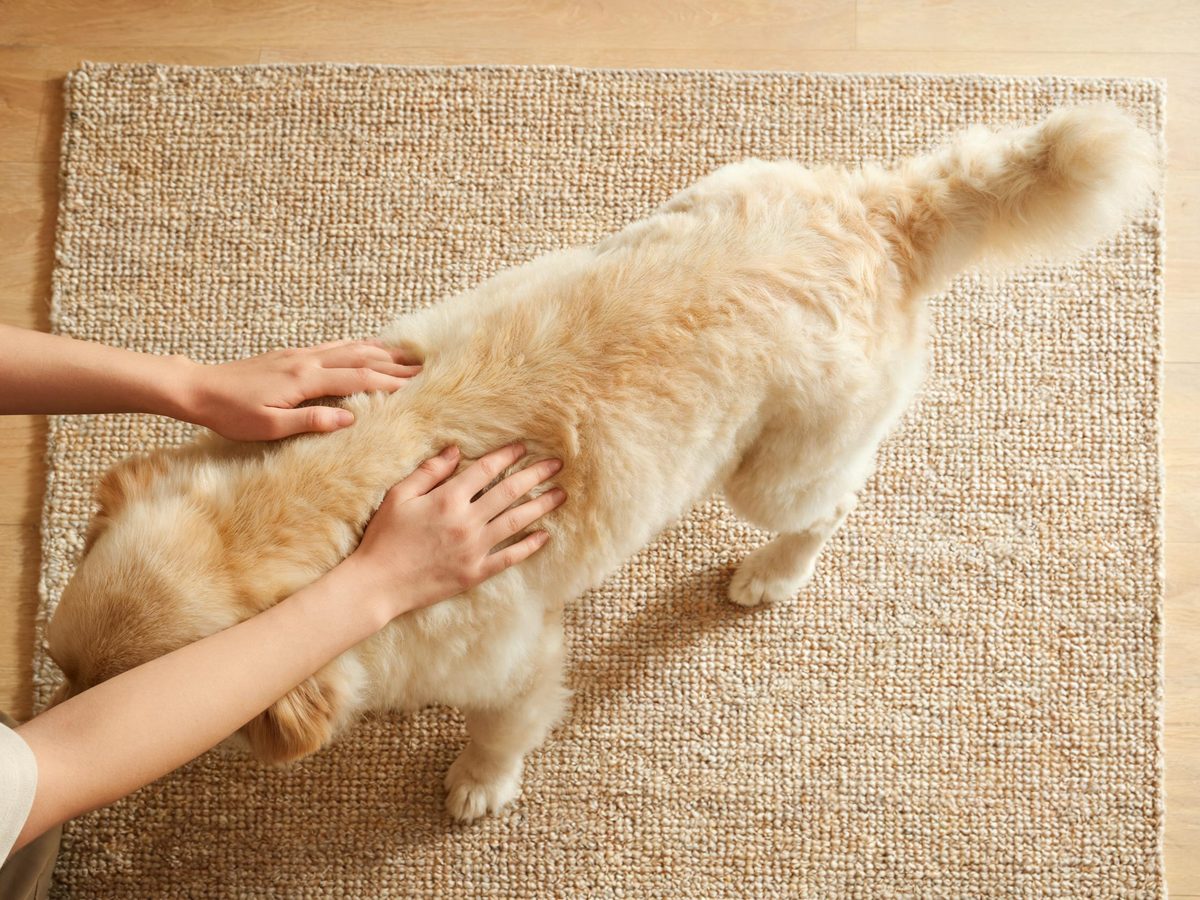
Stand behind the dog and look down. You should see a waist behind the rib cage, a gentle hourglass rather than a straight tube. Then look from the side. The belly should tuck up slightly from the rib cage to the hind legs.
Place your hands on the rib cage, palms flat, thumbs along the spine. You should feel the ribs easily, like the back of your hand, not like a knuckle. If you have to press hard to find them, the dog may be carrying extra weight. If the ribs are sharp and visible, the dog may be underweight.
Feel the spine and the hip bones. They should be covered but not buried. A thick winter coat can hide a thin dog; hands are more reliable than eyes.
How breed and age change the score
Some breeds carry a heavy coat, a broad chest or a low body shape that makes the visual check misleading. A bulldog's waist is not shaped like a greyhound's. A senior dog may lose muscle along the spine, which can look like thinness even when weight is stable.
Puppies go through growth spurts that change their shape quickly. A lean puppy is often normal; a puppy with a round belly may be overfed. Ask the vet what growth curve to expect for the breed.
Do not use human body mass index as a substitute. Dogs vary too much in frame and coat for a single chart to be reliable.
What a body condition score reveals
Extra weight puts stress on joints, the heart and the lungs. It can worsen arthritis and make surgery riskier. Being underweight can signal a dental problem, digestive issue, parasite or another illness. The score is a quick screen for both directions.
For a dog that needs to lose weight, the vet may recommend a target weight and a measured food plan. Do not cut food drastically on your own. Rapid weight loss can be dangerous, especially for a small dog.
For a dog that needs to gain weight, add calories under veterinary guidance. More food is not automatically the answer; the cause matters.
Tracking the score at home
Pick a monthly date. Weigh the dog if possible, or use the hands-on check. Take two photos: one from the side and one from above, with the dog standing on a level surface. Store them in a folder on your phone. The photos will show changes your memory will miss.
Write down the score, the weight, the food amount and any change in activity. Bring the log to the next appointment. A vet can work faster with a trend than with a single snapshot.
When to ask a vet about the score
Call if the dog loses weight without a change in food, gains weight quickly, has a sudden change in appetite, or shows weakness, vomiting or diarrhea. A body condition score is a screening tool, not a substitute for an exam.
If the dog is a senior, a puppy, pregnant, or on a prescription diet, ask the vet to set the target score. The ideal number is not the same for every life stage.
What the number tells you
Learn the hands-on check, write the number and the date in your phone, and compare it at the next visit. A trend is more useful than a single score, and the vet target is more useful than a chart.
Sources and further reading
About the author
Priya Raman
Priya covers everyday animal care, shelter adoptions and the practical side of sharing a home with pets. Her guides focus on setup, routine and when to call a veterinarian.
Pets and household care · Atlanta, Georgia