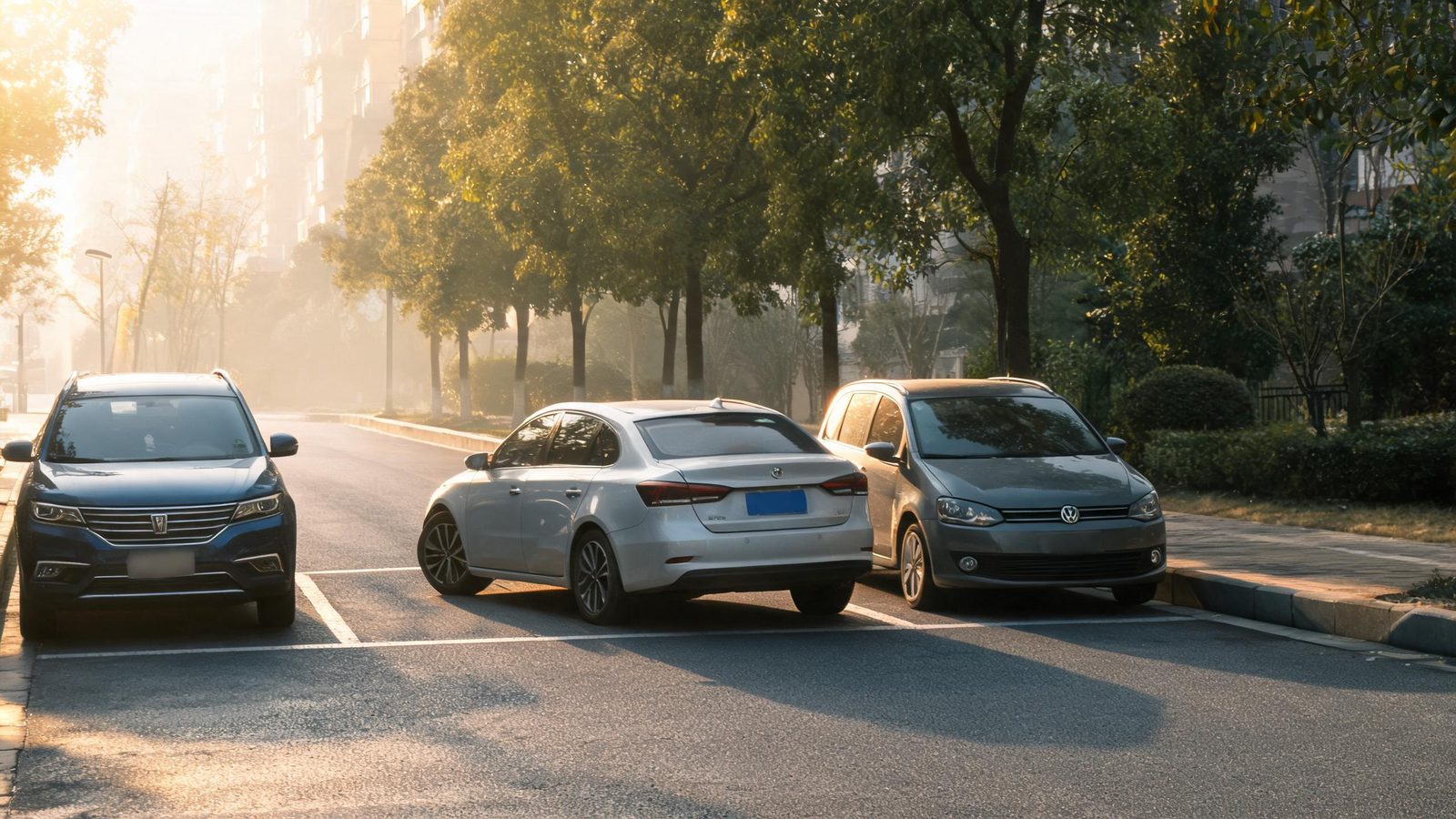
Parallel parking is where an otherwise good road test can come apart in ten seconds. The problem is rarely spatial awareness. It is that the driver has no fixed reference points, so every attempt starts from a slightly different place.
A repeatable method removes the guesswork. You still have to steer, but you no longer have to invent the maneuver in the moment. The sequence below assumes a standard sedan and a space roughly one and a half times the car's length. If your state's handbook specifies a different setup, use that.
Read the space before you touch the wheel
Pull alongside the car parked in front of the space. Your rear bumper should line up with that car's rear bumper, and you should be about two to three feet away from it. Closer is not better. If you are too close, your front end will swing into the other car during the first reverse.
Check the space itself. Look for hydrants, driveway cuts, trash cans, and the curb line. A space that looks open may be illegal to use. On the test, the examiner will tell you where to park; in real life, read the signs before you commit.
The five-step parallel parking sequence
- Signal and stop. Signal toward the space, check your mirror and shoulder, then stop parallel to the front car. Set the car straight, not angled.
- Reverse straight. Back up slowly until your rear bumper aligns with the front car's rear bumper. Keep the wheels straight. This is the step people rush.
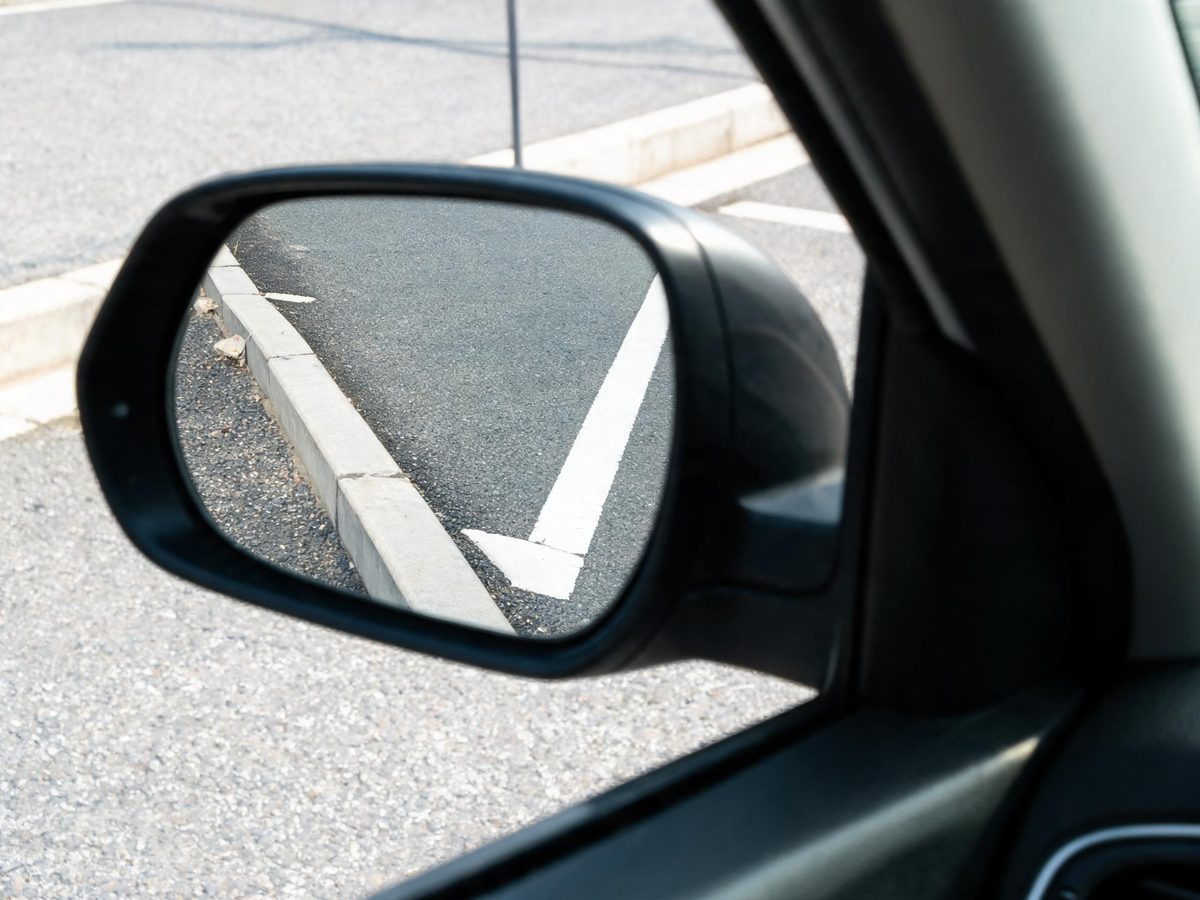
- Turn the wheel fully. Once aligned, turn the wheel toward the curb and reverse. The car should enter the space at roughly a 45-degree angle. Stop when your side mirror passes the front car's rear bumper, or when your car is about halfway into the space.
- Straighten and finish. Turn the wheel the other way and continue reversing. The front end will swing in. Stop before the rear bumper reaches the car behind.
- Center and secure. Pull forward slowly to center the car, set the parking brake, shift to park, and cancel the signal.
The numbered steps matter less than the pauses. Each change of direction should happen when the car is nearly stopped. Turning the wheel while the car is still moving fast is how students end up on the curb.
Calibrating parallel parking reference points for your car
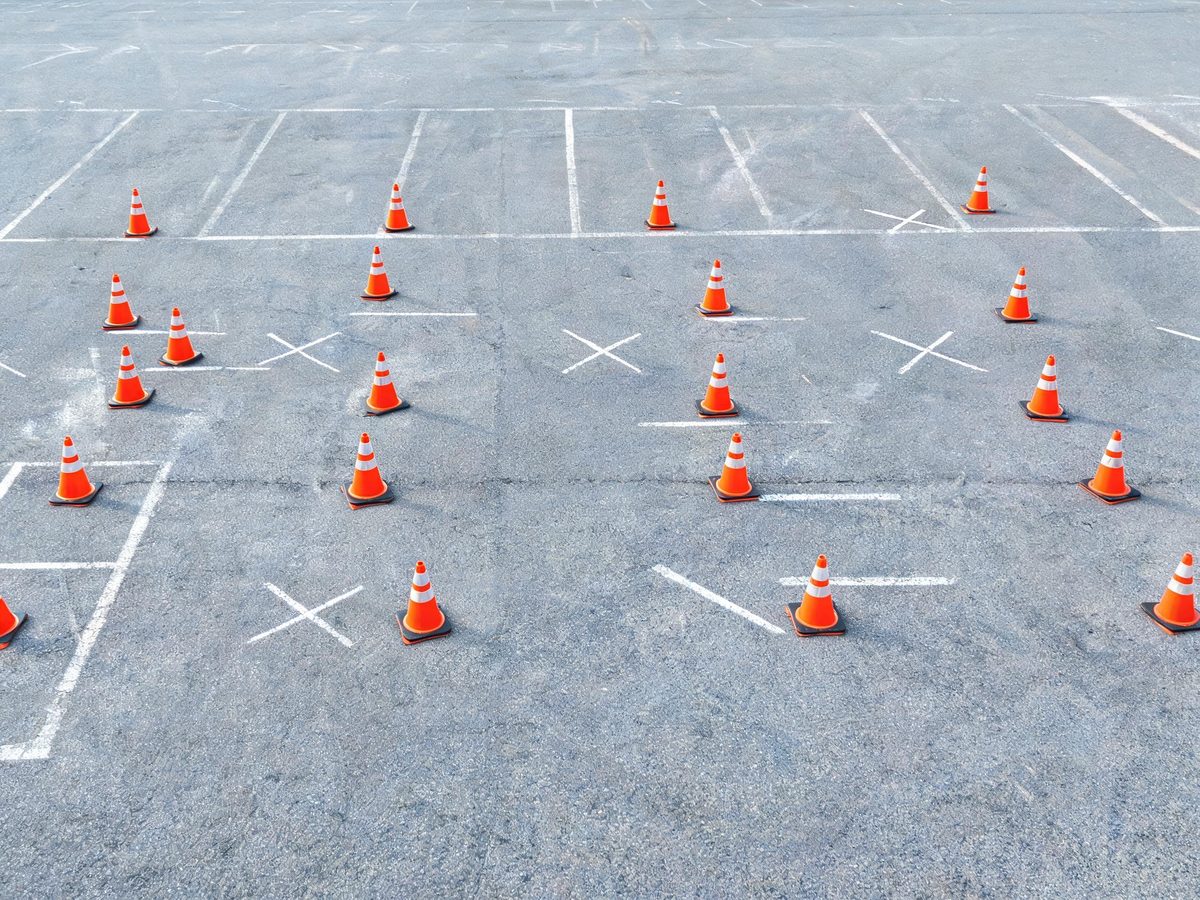
Reference points are personal. Your height, seat position and the shape of the car change what you see in the mirrors. Calibrate them in an empty lot with cones or laundry baskets.
- Place two cones about one and a half car lengths apart, with a third cone marking the curb.
- Start in the same position you would use on the test: parallel to the front cone, two to three feet away.
- Have a friend watch from outside and tell you when the rear bumper clears the front cone. Note what you see in the side mirror at that moment.
- Repeat five times. Then repeat with the friend silent. If you cannot hit the same reference point three times in a row, the setup is wrong, not your coordination.
The parallel parking mistakes that cost the most points
Starting too close. If your car is within a foot of the front car, the front corner will clip it on the first turn. Leave room.
Turning too early. If you turn the wheel before the rear bumper clears the front car, you will not get deep enough into the space. You will end up angled with your rear end near the curb and your front end sticking out.
Turning too late. The opposite problem: you reverse too far and then cannot swing the front in without hitting the car behind. Stop at the reference point even if the space looks huge.
Not checking the curb. A curb strike is a deduction in some states and an automatic failure in others. Use the side mirror and a slight shoulder check; do not rely on the backup camera alone.
Forgetting the finish. After the car is in the space, set the parking brake and shift to park. Many examiners watch for this. A car left in gear is an incomplete maneuver.
What to do when the parallel parking space is tight
In a tight space, the same sequence works with smaller movements. Do not turn the wheel as far. Reverse in shorter increments, checking the mirror between each. If the space is shorter than your car plus a foot, skip it. A test examiner will not ask you to park in a space that cannot legally fit the vehicle.
Ten minutes of parallel parking practice
Set up the cones. Do the sequence once slowly, narrating each step. Then do it three times without narration. Then do it once with a passenger giving directions the way an examiner would: “Pull forward and park in that space.” The goal is to hear an instruction and still execute your own sequence.
Practice in the same car you will use for the test. A different wheelbase changes every reference point. If you must switch cars, spend ten minutes recalibrating before the appointment.
If the space is genuinely too small, drive on and take the next one. A missed attempt is easier to recover from than a clipped curb.
Sources and further reading
About the author
Maya Ortiz
Maya reports on licensing, road rules and the paperwork that slows people down. Her work for Vextor Times focuses on what state agencies actually ask for, and what happens when a form is missing.
Driving and consumer rules · Sacramento, California