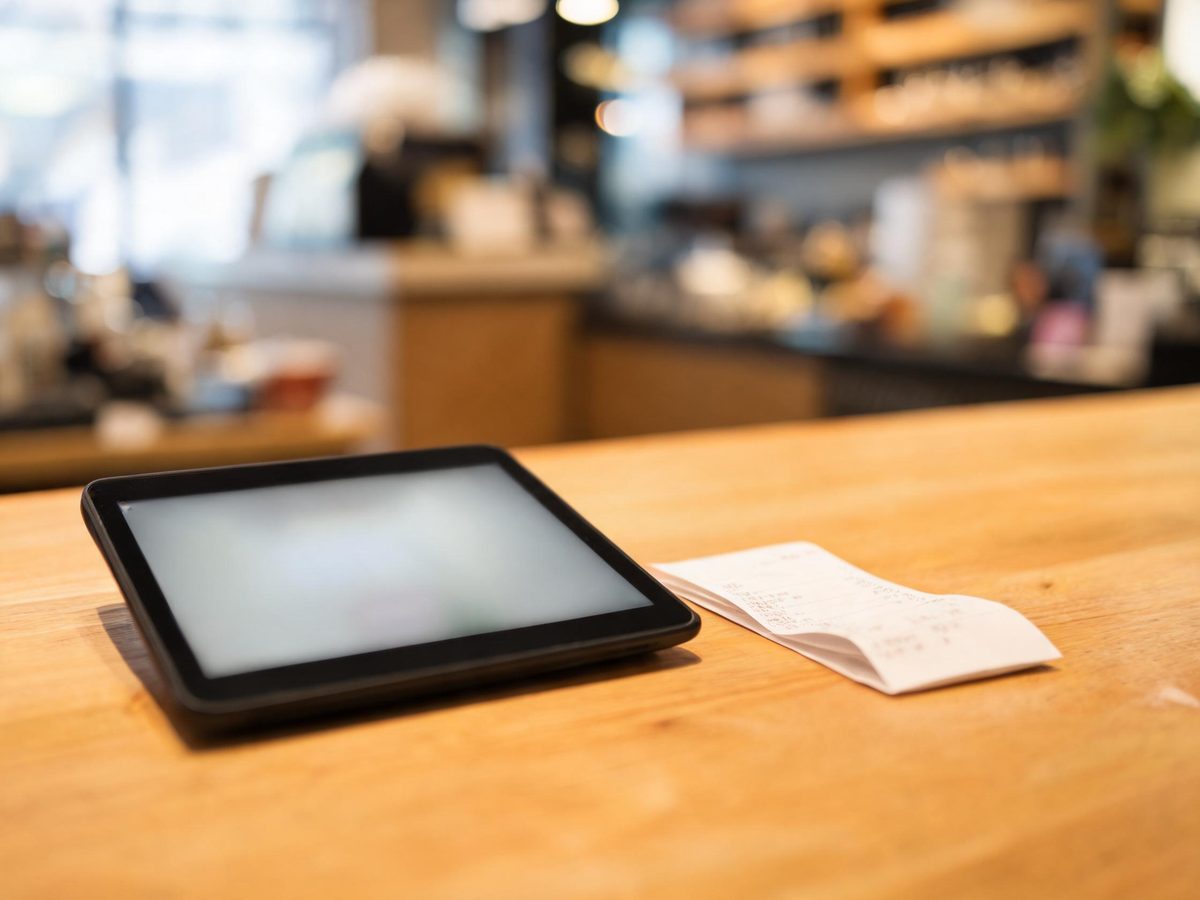
The payment tablet arrives, flips around, and offers three buttons. Eighteen percent, twenty, twenty-two, or a custom amount. The screen is not a moral test, but it can feel like one, especially when the person holding it is standing right there.
Tipping in the United States is a set of local habits, not a single rule. The useful approach is to separate three things: the service charge, the tip, and the quality of the service you actually received.
Read the restaurant tipping bill before you press a button
A service charge is not a tip. It is a line item added by the restaurant, sometimes to cover larger parties, sometimes to fund benefits or a kitchen pool. The bill should label it clearly. If it does, ask whether any of it reaches the server. If the answer is no, a tip on top is a second payment, not a correction.
Some restaurants include a gratuity line for parties above a certain size. That is usually disclosed on the menu or the bill. Read the fine print before you tip on the full total. Paying a 20 percent tip on top of an 18 percent automatic gratuity is an easy mistake.
What restaurant tipping preset buttons leave out
Many screens calculate a tip on the total including tax. That inflates the number slightly. If you want to tip on the pre-tax amount, use the custom button and do the math on the subtotal. There is no law that says you must accept the suggested figure.
Some screens default to a percentage that is higher than the local norm. That is a business decision, not a community standard. Choose the amount you intend to leave, then enter it. The server will not remember the percentage; they will remember whether the interaction was respectful.
Full service, counter service, and everything between
Full-service restaurants usually expect a tip, and 15 to 20 percent is the common range for ordinary service. Higher amounts are common for excellent service, large parties, or a lot of special requests. Lower amounts are appropriate when the service was genuinely poor, but a public confrontation is rarely the best response.
Counter service is less standardized. If you order at a counter and pick up your own food, a small tip is optional. If staff deliver the food to your table, bus the table, or refill drinks, the work looks more like full service. A dollar or two, or 10 percent, is a reasonable middle ground in many places.
Delivery apps add their own fees and tip lines. The driver may receive only part of the service fee. If you want the driver to get the money, use the tip line and check the app's explanation.
Cash or card for restaurant tipping?
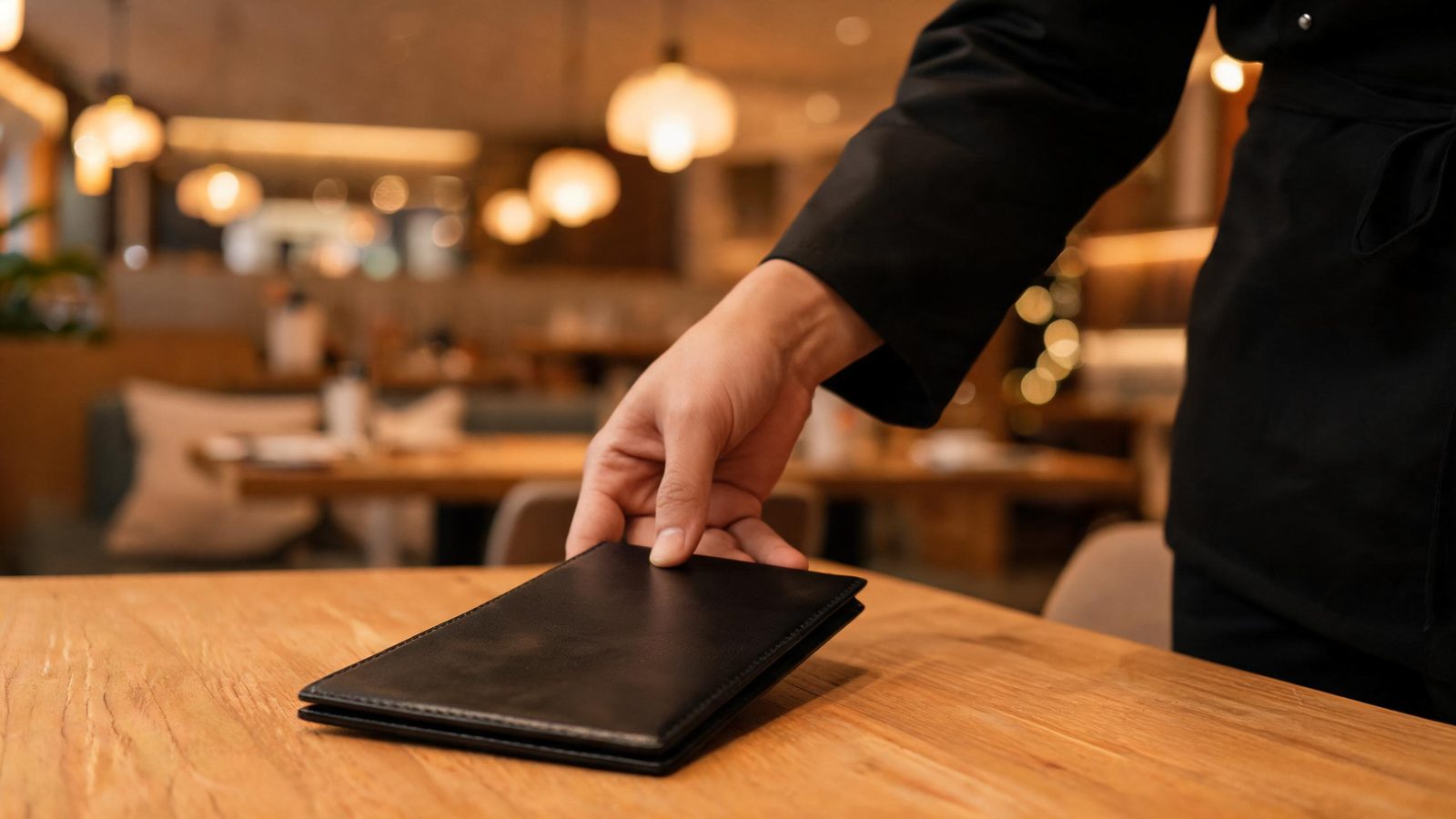
Cash is immediate and leaves no processing trail. Card tips are convenient and usually reach the server through payroll. Some servers prefer cash; some restaurants pool card tips across the staff. Neither is wrong. If you carry cash, a few small bills make the decision easier at the end of the meal.
If you tip in cash, place it in the folder or hand it to the server. Leaving it loose on the table can look like an afterthought, and it can be picked up by the wrong person.
When restaurant tipping feels wrong
Slow service, a wrong order, or a cold plate are real problems. They are also often caused by a kitchen backup or a short-staffed shift, not by the server's attitude. If the problem is fixable, say something at the table. A good restaurant will correct it.
If you plan to reduce the tip, tell the manager why. A reduced tip with no explanation teaches nobody anything. If the service was unsafe or discriminatory, ask for the manager before you leave and describe what happened. That is a complaint, not a tip decision.
Do not punish a server for a kitchen mistake they cannot control. Do adjust the tip for a server who ignored the table, was rude, or disappeared for most of the meal.
Restaurant tipping rules that are actually useful
- Tip on the subtotal if you want to avoid paying a percentage on tax.
- Check for automatic gratuity before adding a tip for a large party.
- Do not tip on a service charge unless you know the charge does not reach the staff.
- Leave cash for small amounts if you want the server to receive it directly.
- Speak up early if something is wrong; a fix at the table is worth more than a silent deduction.
- Be consistent with your own standard, not with the loudest voice in the room.
A simple tipping default
For full service, start at 18 percent for satisfactory service, 20 percent for good service, and more for exceptional care. For counter service, decide based on the work you actually saw. For pickup, a small tip is optional. For delivery, tip the driver separately from the service fee.
These are defaults, not laws. Decide the number before the screen appears; if a service charge already covers the staff, adjust the tip instead of duplicating it.
Sources and further reading
About the author
Colin Reyes
Colin writes about regional foodways, restaurant operations and how to order well without guessing. He spends his weekends at counters, market stalls and barbecue pits.
Food and regional reporting · Kansas City, Missouri